Jeju Haenyeo: Where to Actually See the Women Divers
Quick Answer
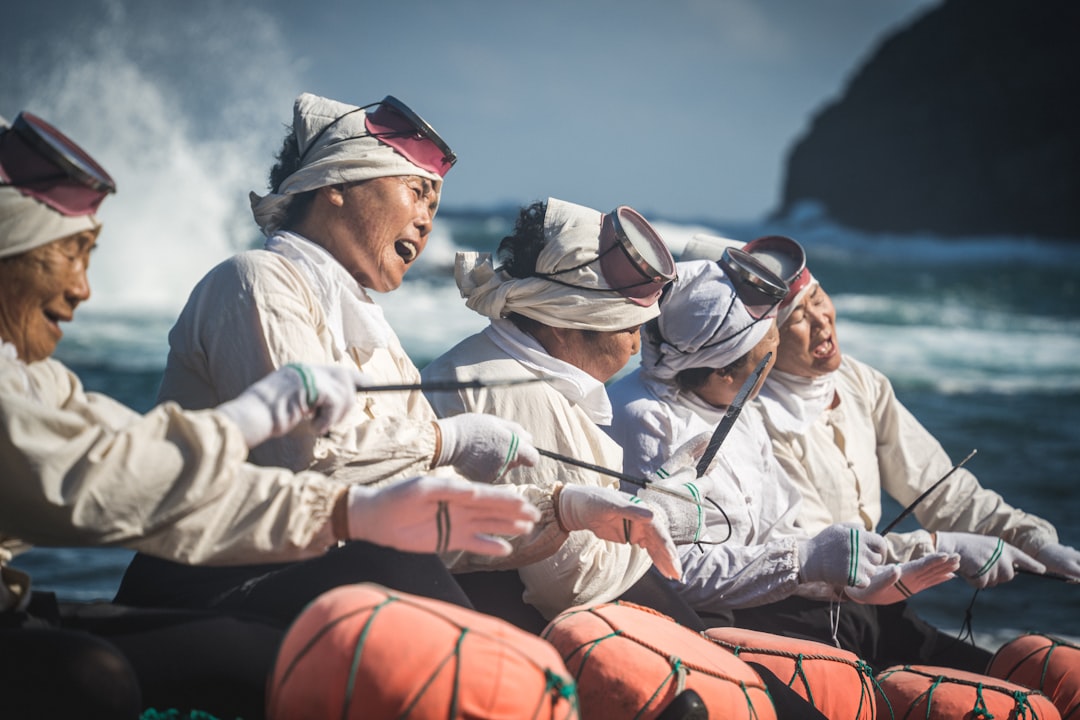
Jeju’s haenyeo — free-diving women who harvest seafood without oxygen tanks — are a UNESCO-recognised living tradition. Seeing them is more scheduled than most guides admit. Regular performances run at set times near Seongsan Ilchulbong and are free to watch. The Haenyeo Museum closes every Monday and stops selling tickets at 17:10. For actual working dives, the villages around Seongsan and Hallim in the early morning are your best chance.
The Full Answer
Almost every Jeju guide mentions the haenyeo. Far fewer tell you where and when you can reliably see them, which leaves visitors hoping to stumble across a dive that may not happen while they are watching.
There are really three different things people mean by “seeing the haenyeo,” and they have completely different logistics: a scheduled performance, a museum, and genuine working dives. I checked the official Jeju listings and the museum’s own information in July 2026 to separate them, because English guides tend to blur the three together.
Three Ways to See Them — Pick the Right One
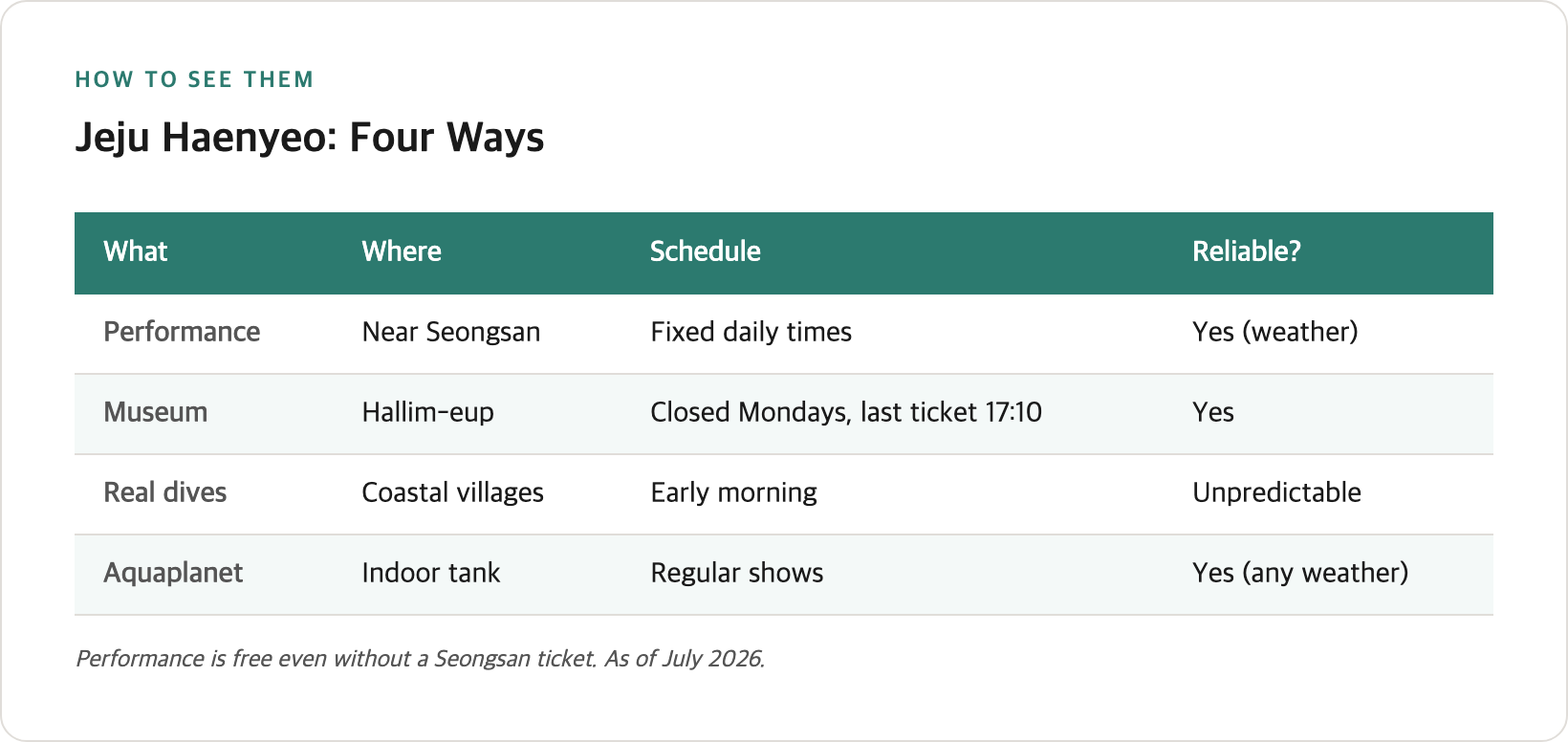
| What | Where | Schedule | Free? |
|---|---|---|---|
| Performance | Near Seongsan Ilchulbong | Fixed daily times | Yes |
| Museum | Hallim-eup, northeast coast | 09:00–18:00, closed Mondays | Paid |
| Real dives | Seongsan / Hallim villages | Early morning, unpredictable | Yes |
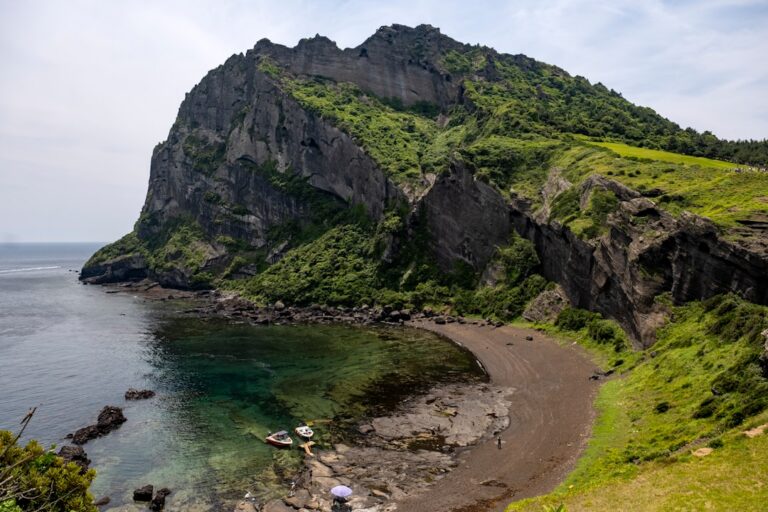
Local tip — The performance near Seongsan Ilchulbong runs at fixed daily times and is free to watch even without a peak ticket — you do not need to pay Seongsan admission to see it. It starts with traditional songs and a pre-dive ritual and lasts around an hour. This is the most reliable way to see haenyeo in action, and it pairs naturally with a Seongsan sunrise visit.
The Haenyeo Museum
The museum in Hallim-eup covers the history, culture and daily life of the divers, and it is the fallback when the sea is too rough for a performance.
- Hours: 09:00–18:00
- Ticket sales end: 17:10
- Closed: every Monday, plus 1 January, Seollal and Chuseok
Local tip — The museum closes every Monday, and last tickets are at 17:10 — nearly an hour before the 18:00 closing. Both catch people out. English guides that list “09:00–18:00, daily” are wrong on both counts, and a Monday trip to Hallim for the museum is a wasted journey.
Getting there without a car takes some planning — see Jeju without a car, as Hallim is on the opposite side of the island from Seongsan.
Seeing Real Working Dives
The performances are real haenyeo, but a scheduled show is not the same as watching the day’s actual harvest.
Local tip — For genuine working dives, the coastal villages around Seongsan and Hallim in the early morning offer the best chance, when the tide and the day’s diving begin. It is unpredictable by nature — you may see divers, you may not — so treat it as a bonus on top of the scheduled performance rather than the plan itself.
There are also hands-on options run by active divers.
Local tip — Fishing villages such as Gimnyeong run haenyeo experience programmes where working divers teach the basics, and the Beophwan diver experience centre operates year-round. These are not on most English itineraries and let you meet divers directly rather than watch from a distance.
Beyond Jeju’s Coast
One more option that surprises people:
Local tip — Aqua Planet Jeju, one of Asia’s largest aquariums, does not run a separate haenyeo dive in its main tank, but haenyeo culture features in the first part of its Ocean Arena show and in a short talk at the touch pool (show times and tickets). It is a very different experience from the coast — controlled, indoor, reliable regardless of weather — so if rough seas cancel the outdoor performance, it is an indoor alternative.
Why the Haenyeo Matter
A little context makes the visit land differently, and it explains the scheduling.
The haenyeo are ageing free-divers who harvest shellfish and seaweed on a single breath, often into their seventies and eighties. UNESCO recognised the culture of Jeju haenyeo as intangible cultural heritage in 2016, and their numbers have fallen sharply as younger women take other work — which is precisely why so much of what you see is now scheduled performance rather than everyday livelihood.
Local tip — Because the working population is elderly and shrinking, the fixed-time performances exist partly to preserve and fund the tradition, not just for tourists. Watching one is closer to attending a heritage demonstration than catching a spontaneous scene, and framing it that way tends to make the experience richer rather than disappointing.
That framing also sets expectations correctly: the reliable, respectful way to see haenyeo is the scheduled performance or the museum, with genuine dawn dives as an unplannable bonus — not the other way around, as some guides imply.
What You Need to Know
-
The performance near Seongsan is the reliable option — fixed times, free, weather permitting.
-
The museum closes Mondays and stops selling tickets at 17:10, not 18:00.
-
Real dives are unpredictable — early morning in coastal villages, treated as a bonus.
-
Weather cancels outdoor performances. Aqua Planet Jeju is the indoor fallback.
-
The museum and Seongsan are on opposite sides of the island — do not plan both for one relaxed day.
-
Experience programmes exist at Gimnyeong and Beophwan for meeting divers directly.
Practical Tips
-
Plan around the Seongsan performance times — the most reliable sighting.
-
Never visit the museum on a Monday. It is closed.
-
Arrive at the museum well before 17:10 — that is when ticket sales stop.
-
Treat real dives as a bonus, not a scheduled event.
-
Don’t pair the museum and Seongsan in one hurried day — they are far apart. See getting around Jeju.
-
Pair it with Seongsan sunrise — the performance is right at the base.
-
Plan the cross-island trip for the museum with the no-car guide.
Frequently Asked Questions
Where can I see the Jeju haenyeo?
The most reliable option is the free performance near Seongsan Ilchulbong at fixed daily times. The Haenyeo Museum in Hallim covers the culture, and real working dives happen in coastal villages in the early morning.
Is the haenyeo performance free?
Yes. The performance near Seongsan is free to watch and does not require a Seongsan Ilchulbong ticket.
When is the Haenyeo Museum open?
09:00 to 18:00, with last tickets at 17:10, and it is closed every Monday plus major holidays.
Can I see real haenyeo diving?
Possibly — coastal villages around Seongsan and Hallim in the early morning offer the best chance, but it is unpredictable.
What if the weather is bad?
Outdoor performances can be cancelled in rough seas. Aqua Planet Jeju’s Ocean Arena show and touch-pool talk, which both feature haenyeo culture, are an indoor alternative that does not depend on the weather.
Can I try diving myself?
Experience programmes at Gimnyeong village and the Beophwan diver centre let active haenyeo teach the basics.
Why are haenyeo performances scheduled rather than spontaneous?
The diving population is elderly and shrinking, so fixed-time performances help preserve and fund the tradition. Genuine working dives still happen but are unpredictable.
Is it worth seeing if it’s a performance?
Yes — think of it as a heritage demonstration by real divers, recognised by UNESCO in 2016, rather than a staged tourist act.
Related Questions
- How to Visit Seongsan Ilchulbong: Sunrise Timing and the Monday Closure
- Visiting Jeju Without a Car: Buses, Fares and the 40-Minute Transfer Rule
- How to Hike Hallasan: The Reservation System Nobody Explains
- Jeju Travel Budget: What a Trip Actually Costs, With or Without a Car
- Jeju Itinerary: 3-Day and 5-Day Plans That Actually Work Without a Car