How to Hike Hallasan: The Reservation System Nobody Explains
Quick Answer
You need a free reservation only for the summit section. Since May 2025 the lower stretches — Seongpanak up to Jindallaebat, Gwaneumsa up to Samgakbong — are open with no booking at all. Book the summit at visithalla.jeju.go.kr. Slots open at 09:00 on the first business day of each month for the rest of that month and all of the next. Caps are 1,000 and 500 a day. No-shows are banned for three months.
The Full Answer
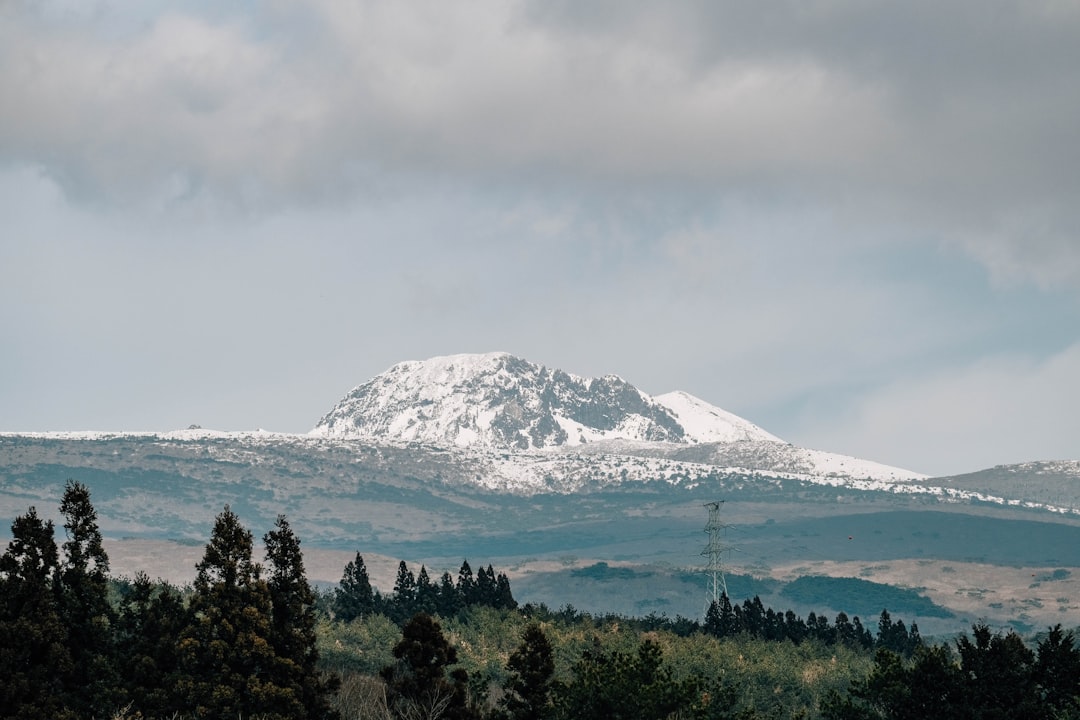
Hallasan is the highest mountain in South Korea and the centrepiece of any serious Jeju trip. Its two summit trails — Seongpanak and Gwaneumsa — have been under a reservation system since a pilot in February 2020, running properly from 1 January 2021.
What almost every English guide still describes is the old version of that system. On 3 May 2025 Jeju Province cut the reserved zone back to the top of the mountain only: Jindallaebat→Baengnokdam on Seongpanak, and Samgakbong→Baengnokdam on Gwaneumsa. Everything below those two shelters became free to walk without a booking. The provincial press release announcing it was headlined, in effect, “you can now climb Hallasan without a reservation” — and it has barely registered in English.
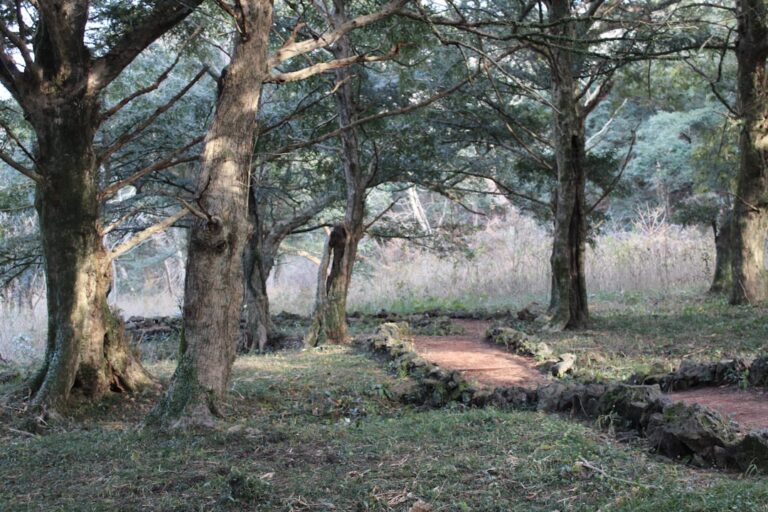
So the accurate framing is not “reserve or don’t come.” It is: reserve if you want the crater rim; just turn up if you want the forest, Sara Oreum or Tamna Valley.
I checked the official reservation system, its notice board and the Jeju provincial press releases on 10 August 2026 to confirm what follows.
The Two Summit Trails
| Trail | Daily cap | Length (one way) | Reservation-free as far as | Character |
|---|---|---|---|---|
| Seongpanak | 1,000 | 9.6 km | Jindallaebat shelter, 7.3 km | Longer, more gradual |
| Gwaneumsa | 500 | 8.7 km | Samgakbong shelter, 6 km | Steeper, more scenic |
Both end at Baengnokdam, the summit crater lake. A common approach is up Gwaneumsa and down Seongpanak; the reservation is tied to the trail you enter on, not the one you come down.
🔴 Check this before you plan — Gwaneumsa’s summit section is closed from 1 August to 30 September 2026 for rockfall-barrier repairs between Samgakbong and Baengnokdam. During that window the crater rim is reachable only via Seongpanak, and Gwaneumsa is walkable as far as Samgakbong shelter without any booking. The park ran the same closure on this section from 15 September to 31 October 2025, so treat it as a recurring maintenance window rather than a one-off, and check the notice board before you book.
Those caps are split by entry window, which is why a date can look half full and still be impossible at the hour you want: Seongpanak takes 800 people between 05:00 and 08:00 and only 200 between 08:01 and 11:30; Gwaneumsa takes 400 and 100. Those figures were set on 1 December 2025, replacing an older three-window structure.
Yeongsil, Eorimok, Donnaeko, Eoseungsaengak and Seokgulam need no reservation at all — and since May 2025 neither do the lower two-thirds of the two summit trails. If the summit slots are gone or the weather is marginal, most of the mountain is still open to you on the day, as are the Olle coastal routes and indoor options like the Haenyeo Museum.
How the Reservation Actually Works
This is the part worth getting right before you plan flights around a summit day.
- Where: visithalla.jeju.go.kr, or by phone on 064-713-9953 (weekdays 09:00–17:30 only)
- Cost: free. There is no entry fee for Hallasan and no charge for the booking
- Booking window: opens for the rest of the current month plus all of the next
- Group size: one booking covers up to 4 people, and each person may hold one summit booking per week
- On completion: a QR code is sent to the phone number or email address you entered — one code per person
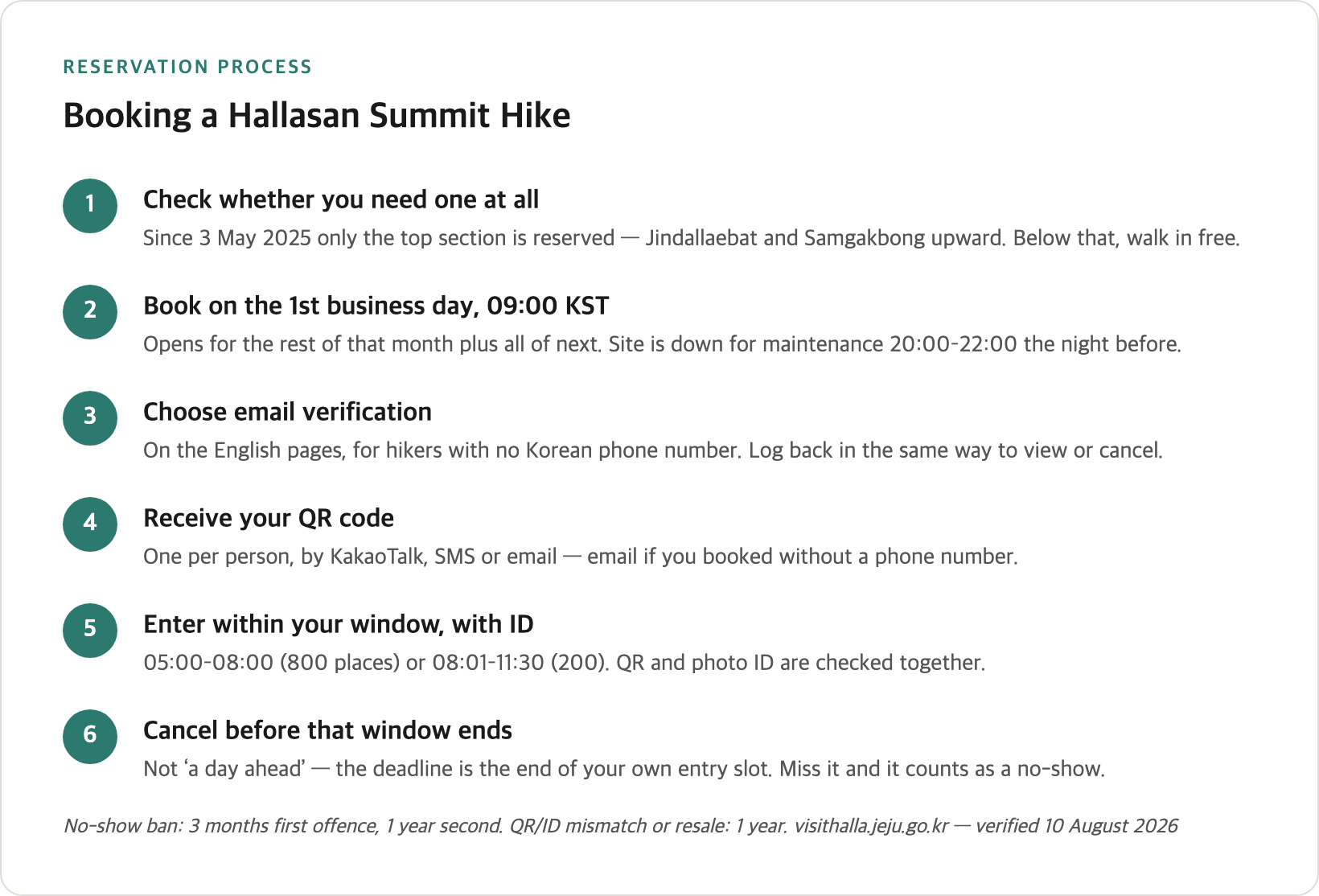
Local tip — Reservations open at 09:00 (KST) on the first business day of each month, not at midnight and not on a rolling daily basis. On 1 June you can book through 31 July. A local Jeju holiday does not push the date back — only a national holiday or a weekend does. Two things the park warns about that no English guide mentions: the site puts you in a queue at opening time and hides the availability calendar for that day, and it runs maintenance from 20:00 to 22:00 both the night before and the opening day itself, when booking is down.
Local tip — “Sold out” is rarer than the guides imply. I pulled the official availability calendar on 10 August 2026: every remaining date in August and every date in September still had Seongpanak places, between 320 and 954 of the 1,000. The dates that genuinely vanish are the exceptions — 1 January for the sunrise climb (the park itself warns bookings spike between 09:00 and 09:30 on the opening day) and peak-foliage autumn weekends. If your date is full, keep checking, including on the morning itself: there is no waiting list, but hikers may cancel right up to the moment their entry window ends, so places drop back into the pool unpredictably rather than on a fixed schedule.
Booking Without a Korean Phone Number
The system assumes a Korean identity by default, which stops a lot of foreign hikers.
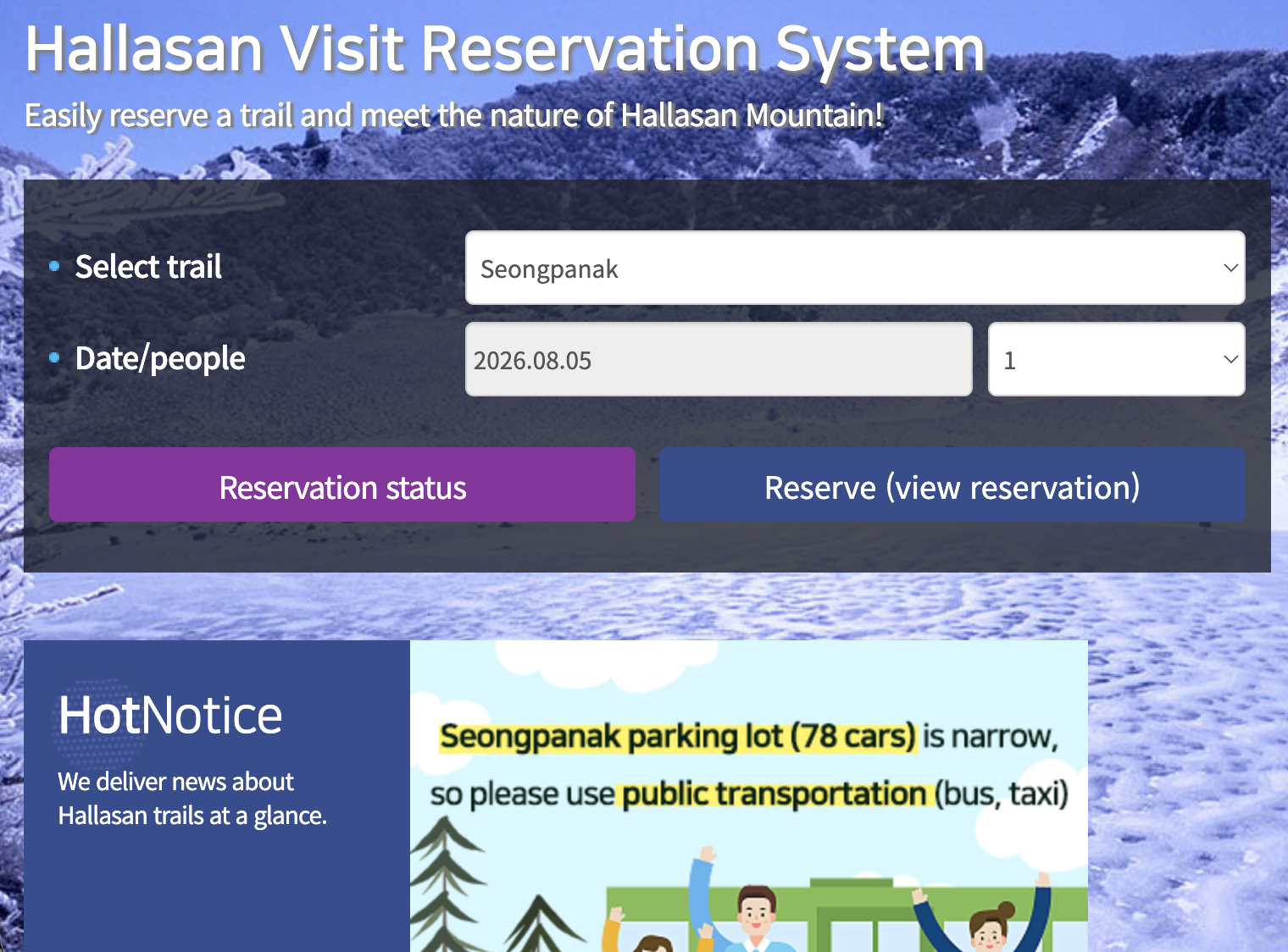
Photo by insung yoon on Unsplash
Local tip — If you have no Korean phone number, use the email verification route. It is offered under “non-member verification” and, by the site’s own wording, is available on the foreign-language pages and only to people without a phone number — Koreans are pushed to real-name verification instead. Your QR code then arrives at that email address. If you do give a phone number, the park sends the code by KakaoTalk first, SMS second and email last.
One warning about that choice: you can only cancel or view a booking by logging back in the same way you booked. Book with email verification and then try to log in with Kakao and your reservation will simply not appear.
You enter each hiker’s details, so a group booking needs everyone’s information at the time of reservation — and each person gets their own QR code.
Season, Weather and What to Bring
Hallasan’s summit sits above 1,900 metres, and the weather up there rarely matches Jeju City below.
| Season | Conditions at the top |
|---|---|
| Spring (Apr–May) | Azaleas near the summit; changeable, still cold up high |
| Summer (Jun–Aug) | Warmest, but frequent cloud and sudden rain |
| Autumn (Sep–Nov) | Clearest views, popular — book early |
| Winter (Dec–Mar) | Snow and ice; crampons often needed |
The summit is roughly 10°C colder than Jeju City on the same day, and cloud closes in fast. The park’s own safety notice tells hikers to carry spare clothing year-round, and a windproof layer, gloves, crampons and hot water in winter — and it can close the summit stretch at short notice under a heavy-rain, typhoon or heavy-snow warning. That is another reason to keep a no-reservation trail like Yeongsil in reserve. Guides written for a warm coastal island undersell how alpine the top is.
The round trip runs 8–10 hours depending on trail and pace — the park allows 4½ hours one way for Seongpanak and 5 for Gwaneumsa — so an early start is not optional, and the seasonal daylight matters more in winter.
The cutoff times matter more than the reservation
Hallasan is a same-day mountain: the park sets seasonal entry times so everyone is down before dark, and rangers turn back anyone who reaches a checkpoint late.
- Earliest entry: 05:00 in summer, 05:30 in spring and autumn, 06:00 in winter
- Seongpanak and Gwaneumsa: the trailhead and the shelter checkpoint (Jindallaebat, Samgakbong) both close at 11:30 in winter and 12:30 in summer
- Leaving the summit: you must start down from the east crater rim by 13:30 in winter, 14:30 in summer
Local tip — The park’s reservation site currently publishes two different cutoff tables on the same page — one two-season, one three-season, disagreeing by up to 30 minutes. The trail description pages use the stricter two-season set, so plan to the earlier time. Nobody writing in English seems to have noticed the contradiction; if you build your day around the looser table you can lose the summit at the checkpoint with the permit in your hand.
No-Shows and Timing Rules
The reservation is tied to a specific entry window, and the penalties for ignoring it are real.
- You must scan in during your reserved window — 05:00–08:00 or 08:01–11:30. Turn up outside it and the code will not let you through
- No-show penalty: a first offence bans you from reservations for three months; a second for a year
- At the gate you show the QR code and photo ID together. If the two do not match you are refused entry and banned for a year — and the same penalty applies to anyone caught buying or selling a code
Local tip — The cancellation deadline is later than almost everyone assumes, and getting it wrong is what triggers the ban. You can cancel right up to the end of your own entry window — book 08:00–11:30 and you have until 11:30 to pull out cleanly. Miss that moment without cancelling and it is a no-show, even if the reason was weather. When the park cancels for a storm it messages every booking, but you still have to cancel it yourself before the window closes.
Bring your passport, not just the code. The ID check was reinforced in June 2026 specifically to stop QR resale, and a mobile ID displayed on screen in advance is explicitly accepted — but “I have the QR” is not enough on its own. Build in a buffer for the bus from Jeju City, too: route 281 leaves Jeju Bus Terminal from 06:00 and takes about 45 minutes to Seongpanak, and the 181 express runs from the airport from 06:10 in about 35 minutes. For onward Jeju logistics, see visiting Jeju without a car and the 3- and 5-day itineraries.
What You Need to Know
-
Only the summit section needs a reservation. Since 3 May 2025 you can walk Seongpanak to Jindallaebat (7.3 km) and Gwaneumsa to Samgakbong (6 km) with no booking, alongside Yeongsil, Eorimok and Donnaeko.
-
Gwaneumsa’s summit section is shut 1 August – 30 September 2026. Seongpanak is the only route to the crater rim in that window.
-
Bookings open 09:00 on the first business day of the month. Not midnight, not daily — and the site is offline for maintenance 20:00–22:00 the evening before.
-
Email verification lets foreigners book without a Korean phone number, on the foreign-language pages.
-
Sold-out dates are rarer than guides suggest. On 10 August 2026 every August and September date still had Seongpanak places.
-
Cancel before your entry window ends, or it counts as a no-show: three months’ ban first time, a year the second.
-
Carry photo ID as well as the QR code. A mismatch means no entry and a one-year ban.
-
Weather closes the summit regularly. Have a non-summit trail as a backup and check conditions the day before.
Practical Tips
-
Decide first whether you actually need a booking. If Sara Oreum, the fir forest or Tamna Valley is what you came for, no reservation is required at all.
-
Book at 09:00 KST on the first business day of the month if your dates are fixed, and take the 05:00–08:00 window — it holds 800 of Seongpanak’s 1,000 places.
-
Use email verification on the English pages if you have no Korean number, and log back in the same way to view or cancel.
-
Screenshot your QR code and bring your passport — signal is patchy at the trailhead and ID is checked against the code. Sort out mobile data before Jeju.
-
Take the bus, not a hire car. The Seongpanak lot fills very early and the roadside is an enforced no-parking zone for kilometres either side. See getting around Jeju without a car, and the Jeju budget guide if you’re pricing the day.
-
Plan to the earlier cutoff. Reach Jindallaebat before 11:30 in winter or 12:30 in summer; the round trip is 8–10 hours, so check daylight for your season.
-
Cancel before your window closes if plans change — that, not “a day in advance”, is the deadline that avoids the ban.
Frequently Asked Questions
Do I need a reservation to hike Hallasan?
Only for the summit section. Since 3 May 2025 the reservation covers just Jindallaebat to Baengnokdam on Seongpanak and Samgakbong to Baengnokdam on Gwaneumsa. Below those shelters — and on Yeongsil, Eorimok, Donnaeko, Eoseungsaengak and Seokgulam — you can simply turn up.
How much does it cost?
Nothing. There is no entry fee for Hallasan and no charge for the reservation.
When do reservations open?
At 09:00 KST on the first business day of each month, covering the rest of that month and all of the next. A Jeju local holiday does not delay it; a national holiday or weekend does.
Can I book without a Korean phone number?
Yes. Use the email verification option under non-member verification on the foreign-language pages — the site restricts it to people who have no phone number. Your QR code then arrives by email, and you must log back in the same way to view or cancel.
What happens if my date is fully booked?
Keep checking, including on the day. There is no waiting list, but hikers can cancel right up to the end of their entry window, so places return to the pool unpredictably. In practice full dates are uncommon: on 10 August 2026 every remaining August and September date still had Seongpanak places.
What do I have to show at the checkpoint?
Your own QR code and photo ID, checked together. A mismatch means refused entry and a one-year reservation ban, as does buying or selling a code.
How long does the hike take?
The summit round trip runs 8–10 hours depending on trail and pace, so an early start is essential.
How cold is the summit?
Roughly 10°C colder than Jeju City, with fast-moving cloud. The park tells hikers to carry spare clothing year-round, and a windproof layer, gloves and crampons in winter.
Related Questions
- Visiting Jeju Without a Car — Buses, Fares and Transfer Rules
- How to Visit Seongsan Ilchulbong — Sunrise Timing and Closures
- Jeju Olle Trail — Which Course to Walk
- Jeju Itinerary: 3-Day and 5-Day Plans That Actually Work Without a Car
- Manjanggul Lava Tube: Reopened in 2026 — What’s Actually Accessible Now
- Seoraksan and Jirisan Shelter Reservations: How Korea’s Lottery System Works