Booking the Ski Shuttle From Seoul — What Korea’s Resorts Leave Out
Last Updated on September 23, 2026
Quick Answer
If you are skiing in Korea without a car, the hard part is not choosing a resort — it is booking the shuttle bus. Vivaldi Park runs a separate, foreigner-only shuttle site with different fares and cancellation rules than the Korean-language one, and its terms say the bus will not run at all if nobody has booked. Reservations, not resort comparisons, are where trips actually go wrong.
The Full Answer
Most English-language guides to skiing in Korea compare resorts — slope counts, beginner-friendliness, which one has the best night skiing. That comparison already exists in several long, well-researched English guides, some written by people who have skied at these resorts for years. What those guides consistently skip is the part that determines whether a car-free visitor gets to the mountain at all: how the shuttle bus itself is booked, priced, and run.
That gap is not an accident of laziness. Resort comparisons are the kind of content ski-tour sellers and travel-affiliate sites are motivated to write, because a comparison sells a package. A cancellation policy, a foreigner-only fare, or a stale timetable does not sell anything — so almost nobody writes it down. Reading the operators’ own booking pages and terms, in Korean and English, closes that gap.
This guide focuses on three resorts within day-trip range of Seoul — Sono Belle Vivaldi Park (소노벨 비발디파크), Konjiam Resort (곤지암리조트), and MONA YongPyong (모나 용평) — because these are the ones with shuttle systems detailed enough to compare. High1 Resort (하이원리조트) is included for its lift pricing, since its own English page has a dating problem worth knowing about before you budget a trip.
Two Shuttle Systems at Vivaldi Park, and Only One Adds a Service Fee
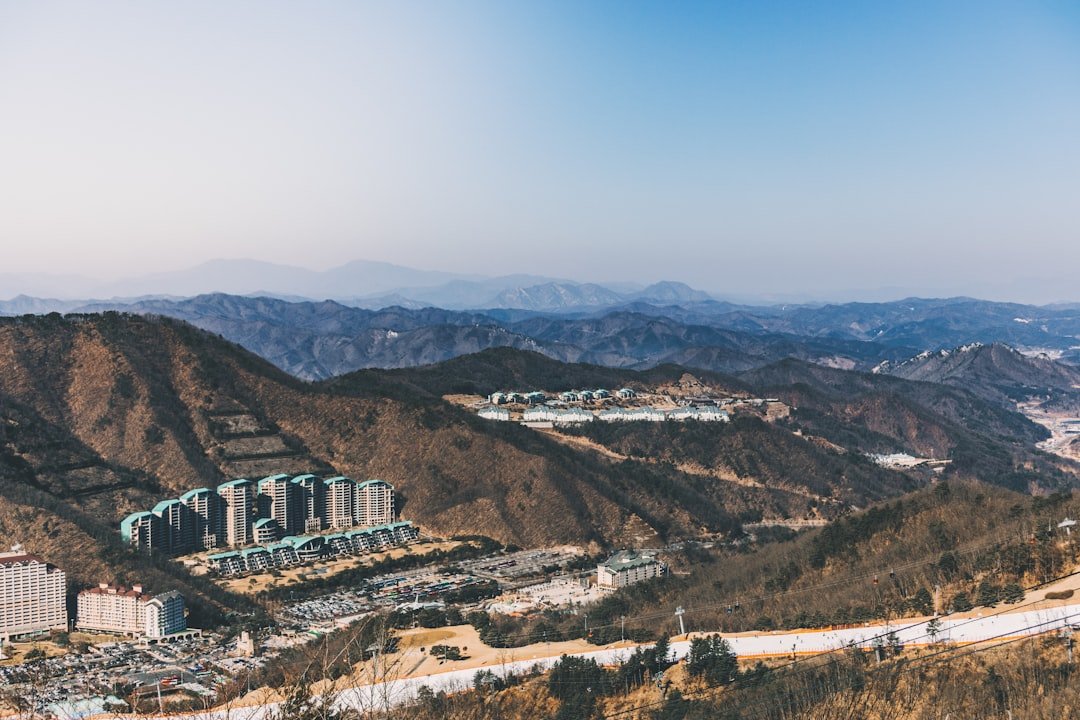
Vivaldi Park’s official shuttle-and-fee page lists two buttons side by side: one links to busline.co.kr, a Korean-language booking site; the other links to vivabus.net, labeled “Shuttle Bus for Foreigners.” They are run through different booking flows, and — this is the part that does not show up in any of the eight English-language guides checked for this article — they are not priced the same.
I opened both booking sites and read their terms side by side — the terms, not the final checkout totals. The foreigner site’s own terms say the quiet part out loud: “This fare is exclusively for foreign visitors. The fare may differ from domestic prices as it includes a service fee.” It does not say by how much, only that the surcharge exists and is built into the listed price rather than added at checkout.
Local tip — English-language guides that link readers to Vivaldi Park’s shuttle booking page send them to
vivabus.net, the foreigner-priced site, without mentioning that a separate Korean-language option (busline.co.kr) exists on the same official page — the one whose fare does not carry that service fee. I did not compare the two fares directly, and the two sites do not run identical routes, so treat this as a difference in what the fare includes rather than a confirmed price gap.
The foreigner shuttle is operated by a travel company, DAE MYUNG TOUR (+82-31-765-7965), not by Vivaldi Park itself. Its routes run from Hongdae Station, Dongdaemun History & Culture Park Station, and Konkuk University Station, plus a stop from Sports Complex Station — with no assigned seating, first-come, first-served, and a request to arrive five minutes before departure. Children are defined as under 13.
Can a Shuttle Run Be Cancelled After You Book?
The foreigner shuttle site states this directly, in its own terms: “We will not contact passengers who do not show up. The shuttle bus will not operate if there are no bookings.” Read it literally: the run is cancelled only when the booking count is zero, and your own booking makes it non-zero. What the operator does not publish is any minimum-passenger threshold, so there is no way to tell from the terms whether a thinly booked run is at risk. Treat it as a stated no-passenger cancellation, not a confirmed minimum-numbers policy.
Cancellation works on a tight clock. A full refund is available if you cancel before 4:00 PM KST the day before travel; after that, cancellations — including no-shows — are not refunded. If seats remain unsold close to departure, walk-up passengers can buy a spot on-site, but cash only. None of the eight English guides checked for this article mention that the shuttle can be cancelled if it doesn’t fill, or that same-day, walk-up seats are cash-only.
Konjiam Resort’s own shuttle works on a similar logic, though the mechanism is a reservation cutoff rather than a minimum-passenger threshold: bookings close at 6:00 PM the day before travel, same-day booking is not possible, and the maximum group size per booking is five people. If seats remain, walk-up boarding is allowed — again, subject to availability rather than guaranteed.
Getting to Yongpyong: The Sports Complex Transfer
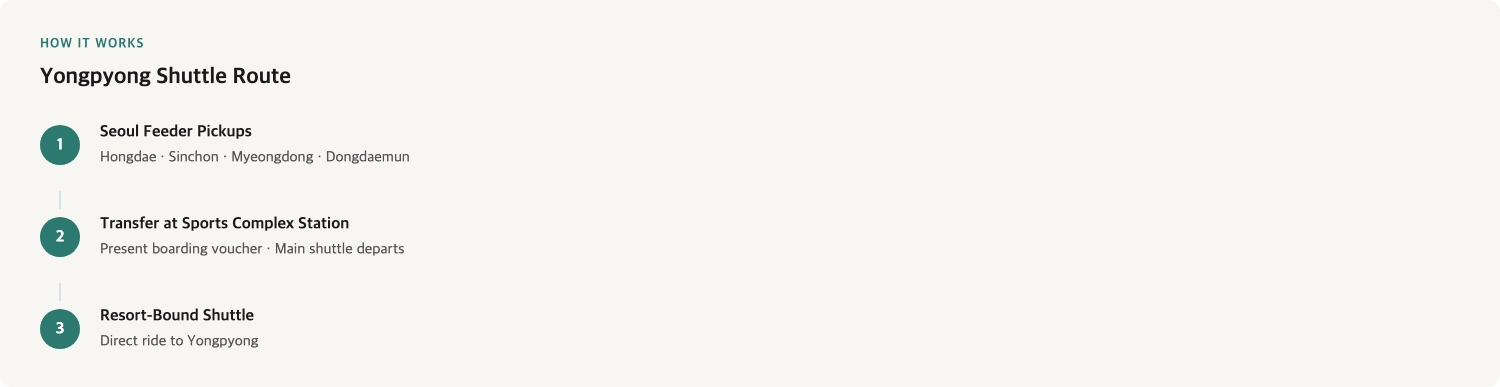
MONA YongPyong’s shuttle, run through a partner platform (KD Tour / Rideus), lists four pickup points in Seoul — Hongdae, Sinchon, Myeongdong, and Dongdaemun — the same four points that essentially every English guide lists for Korean ski shuttles generally. What none of the guides checked here mention is that these are not the resort-bound bus itself. They are feeder stops.
The booking site’s own instructions read: passengers gather at Sports Complex Station (종합운동장역) and transfer to the actual resort-bound shuttle there, presenting their boarding voucher at the transfer point. If you were not able to board at Hongdae, Sinchon, Myeongdong, or Dongdaemun, the instructions say to use other public transportation to reach Sports Complex Station yourself, ten minutes before the scheduled departure.
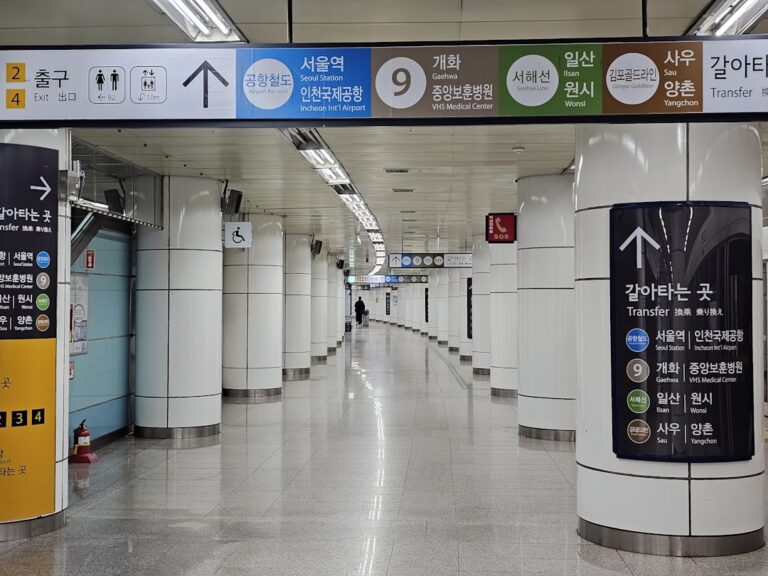
Local tip — Treat Hongdae, Sinchon, Myeongdong, and Dongdaemun as connecting points, not the actual ride. If you miss the connecting pickup, the fallback is getting yourself to Sports Complex Station on Korea’s subway — see our guide to getting around Korea for how the subway and transfer system works — not calling the shuttle operator to wait.
As of this research, Yongpyong’s shuttle page had already posted 2026–27 season dates: Seoul departures from November 27, 2026 through March 1, 2027, and an Incheon Airport route from December 7, 2026 through February 12, 2027. That is one of the only concrete 2026–27 dates published anywhere for this cluster of resorts as of late September 2026 — worth knowing if you’re trying to lock in travel dates before the resort itself confirms an opening day. If you’re arriving from outside Korea, our guide to getting from Incheon Airport to Seoul covers the leg before this one, and for the KTX option — Yongpyong is a workable trip from Jinbu (진부) Station — see our KTX booking guide for how refund windows and seat classes work. If you are heading to the same county for ice fishing rather than skiing, the Pyeongchang Trout Festival guide covers what can be booked online and when ticket sales stop.
Konjiam’s Official Timetable Is Still Set for 2020–21
Konjiam Resort’s own shuttle page — the one under Resort Guide > Directions > Terminal Shuttle — lists pickup at Exit 4 of Jamsil Station, drop-off at Konjiam Station, and a return route that does not pass through Konjiam Station at all. Those structural details are likely stable year to year. The posted schedule is not.
I checked the page directly. It still carries a notice about “enhanced social distancing” seating rules, and the listed date ranges — December 11 through 17, and December 18 through February 14 — line up exactly with the 2020–21 calendar, not any recent season. Checking the weekday-to-date match (December 11, 2020 was a Friday; the notice’s date ranges match that year’s calendar precisely) confirms it: this page has not been updated in roughly six years.
Local tip — If a Korean ski resort’s shuttle page mentions COVID-era distancing rules, treat the entire timetable on that page as unreliable, not just the seating notice. Call the operator directly for current dates. For Konjiam’s shuttle, that’s Saehan Express (새한고속, 031-798-5588) or, after 6 PM, the resort’s customer center (031-8026-5778).
Konjiam sits close to Hwadamsup Botanical Garden (화담숲), on the same LG-affiliated grounds outside Gwangju, Gyeonggi Province — our Hwadamsup ticket guide covers pre-booking and getting there in more detail, and much of that transportation logic (Seoul-to-Gyeonggi shuttle structure, advance booking requirements) carries over.
A phone call is the only reliable way to get a current shuttle schedule here, and that’s a real barrier if you don’t speak Korean or you’re traveling on a data-only eSIM — a hotel front desk can often make the call for you if you’re not able to. If calling isn’t an option, Konjiam’s shuttle is likely impractical for your trip: unlike here, Vivaldi Park and Yongpyong both have shuttle booking paths built for foreign visitors online, covered above.
Official English Fee Pages Are Not Reliable Either
The shuttle sites are not the only place where the English version lags behind. High1 Resort’s own English-language lift fee page, as of this research, was still labeled “2023-24 Ski Season.” It lists a 9-hour lift ticket that no longer exists on the current Korean-language pricing page, and it has no 4-hour ticket option — which the Korean page does offer for the 2025–26 season, at 68,000 KRW for adults and 56,000 KRW for children (as of 2026). Every price on the outdated English page is also lower than the current Korean one — by 4,000 to 14,000 KRW, depending on the ticket length.
Local tip — I opened High1’s own English fee page directly on September 22, 2026. The “2023-24 Ski Season” label was still there, two seasons out of date. If you’re budgeting a High1 trip from the English page, expect the real price to run higher — and check the Korean-language fee page (or have a translation tool read it) rather than trusting the English one for current numbers.
It would overstate the problem to say High1’s entire English site is out of date — it isn’t. The same page’s rental prices, season pass cost, and family water-park pricing match the current Korean figures exactly. Only the lift ticket table is stuck two seasons behind. One useful signal did carry over correctly: both the Korean and English pages agree that children under 5 are not sold lift tickets at all.
The same pattern shows up with season passes. At least one widely read English guide still describes a five-resort “X5 Pass”; what’s actually sold for 2026–27 is X6+, with Alpensia newly added as a sixth resort, sold through NOL World’s English-language site. It’s a resident’s purchase, though — not worth it for a one- or two-day trip.
Lift Ticket Pricing and the “Korean Age” Trap
Vivaldi Park’s child-ticket rule is where this gets specific in a way that matters for planning a family trip: a child rate applies to those aged 13 and under, calculated by Korean age — current year minus birth year, plus one — not the international age used on a passport. A note on the same page adds that a child entering middle school in March still qualifies for the child rate that season.
Since Korea’s 2023 age-unification law changed how age is used for most legal and administrative purposes, it would be reasonable to assume ticket pricing switched over too. Vivaldi Park’s own fee page shows it did not — at least not here. Our guide to Korean age covers why three different age systems still coexist in Korea and how to calculate each one; the short version for ski tickets is that a child born in late 2013 turns 13 in international age during the 2026–27 season but is already 14 in Korean age, which can be the difference between a child ticket and an adult one.
Local tip — This rule is confirmed for Vivaldi Park specifically — its terms spell out the Korean-age formula in full. Yongpyong’s English page lists a child rate for “ages ~13” without specifying which age system, and High1’s pages give an age range without a formula either. Don’t assume Vivaldi’s rule applies resort-wide; check each resort’s own fee page before assuming your child qualifies for the discount.
None of the eight English guides checked for this research mention Korean age as a factor in ski ticket pricing at all.
When Do Resorts Actually Open for 2026–27?
As of this research (late September 2026), no major Korean ski resort has confirmed its 2026–27 opening date. That is normal at this point in the year — Korean resorts typically confirm opening dates in mid-to-late November, after early snowmaking and slope conditions are assessed, and season-pass and early-bird sales open well before that. Treat everything below as either a confirmed date or last year’s date for reference — not a forecast.
| Resort | 2026–27 status | 2025–26 opening (for reference only) |
|---|---|---|
| Sono Belle Vivaldi Park | Not yet announced | December 5, 2025 (confirmed on official site) |
| Konjiam Resort | Not yet announced | December 10, 2025 (secondary source) |
| High1 Resort | Not yet announced; early-bird packages already on sale | November 28, 2025 (two secondary sources agree; official announcement was posted November 24, 2025, but the exact date was embedded in an image, not text) |
| MONA YongPyong | Resort opening not yet announced; shuttle dates already published (Seoul: Nov 27, 2026–Mar 1, 2027) | November 21, 2025 |
| Welli Hilli Park | Not yet announced; season-pass sales already open | November 22 – December 5, 2025 (secondary sources disagree by 13 days) |
| Jisan Forest Resort | Not yet announced | December 6–12, 2025 (secondary sources disagree by 6 days) |
| Elysian Gangchon | Not yet announced | December 5–6, 2025 (secondary sources disagree by 1 day) |
| Alpensia | Not confirmed at time of research | November 22 – December 4, 2025 (secondary sources disagree by 12 days) |
The two secondary sources used for last year’s dates disagreed on six of the eight resorts they both covered, by up to thirteen days. One disagreement is checkable: Vivaldi Park’s own site confirms a December 5, 2025 opening, matching one tracker (vviptravel) and contradicting the other (flipkorea’s December 4) — so at least one source here is measurably wrong, not just different. Treat last year’s dates as reference only; confirm 2026–27 dates from each resort’s own site once posted in mid-to-late November.
Or Skip the Booking Entirely — What Package Tours Actually Include
Everything above assumes booking the shuttle and lift ticket separately, direct with the resort or its operator. Third-party package tours are the other route, and they run into a version of the same problem this guide keeps describing: the product name doesn’t tell you what’s inside.
As of September 2026, GetYourGuide’s South Korea ski & snowboard listings included two products built the same way — one for Jisan Forest Resort, one for Yongpyong. Only the Jisan listing says so in its name (“Ski Full-Day Tour or Shuttle”); the Yongpyong one is called “Ski Day Tour with Transportation” and gives no hint that a tier choice is involved at all. I read through what each one includes, since the includes/excludes split is marked by icon color rather than by plain text on the page, and the two products turned out to share the same structure.
Both include hotel pickup and drop-off (Seoul city center only), round-trip transportation to the resort, and ski equipment rental (boots and poles). From there, each one splits into two tiers. The Basic tier adds a 30-minute beginner lesson — and nothing else. The Full tour tier adds a ski suit rental, a half-day lift pass, and a two-hour lesson. Meals, snowboard swaps (available for an extra charge), sleds, goggles, and helmets are excluded from both tiers.
The catch matches the rest of this guide: only the Full tour tier includes a lift pass. Book the cheaper Basic tier on a listing called “Full-Day Tour,” and you get transportation and gear to the mountain — not a way to ride the lift.
- Jisan Forest Resort — Ski Full-Day Tour or Shuttle — from ₩40,603, the Basic-tier price without a lift pass (rated 4.9 from 10 reviews, as of September 2026)
- Yongpyong — Ski Day Tour with Transportation — from ₩135,343 (rated 4.9 from 42 reviews, as of September 2026)
Neither listing is a recommendation over booking the shuttle and lift ticket yourself — a package trades the reservation risk described above for a fixed, higher price, and still requires reading the tier before assuming a lift pass is included. Both listings also state Korea’s ski season runs “early December to late February,” later than most resorts’ own opening dates in mid-to-late November — so early-season visitors may find a resort open before its package tours start.
What You Need to Know
- The foreigner-priced shuttle and the domestic one are not interchangeable. At Vivaldi Park, they are two different websites, and only the foreigner-facing one states that its fare carries a service fee. Linking to one without mentioning the other, which most English guides do, hides that from the reader.
- Two different risks, and they are not the same risk. Vivaldi’s foreigner shuttle states it will not operate if nobody has booked. Konjiam’s terminal shuttle does not cancel runs that way — its constraint is the booking window: reservations close at 6:00 PM the day before, there is no same-day booking, and a walk-up seat depends on whatever is left.
- Official pages get stale in both directions — price and date. High1’s English lift-fee table is roughly two seasons behind on price. Konjiam’s shuttle timetable is roughly six years behind on dates. Neither failure is visible unless you check the page’s own labels and dates, not just the numbers on it.
- Child ticket ages are not standardized across resorts, and at least one resort still uses Korean age. Assume nothing carries over from one resort’s rule to another’s.
- Hongdae, Sinchon, Myeongdong, and Dongdaemun are not always the final ride. For Yongpyong specifically, they’re feeder stops to a transfer point at Sports Complex Station — missing the connection means getting yourself there another way.
Practical Tips
- Check whether the resort has a separate foreigner shuttle site before booking, and compare it to the domestic one if you can read Korean, or have someone who can. At Vivaldi Park, the price difference is built into the foreigner site’s own fare, not added later.
- Book shuttle seats early in the week rather than the day before, especially for smaller resorts. Shuttles that run on a minimum-booking threshold, like Vivaldi’s foreigner service, are more likely to be cancelled on thin-demand days.
- Carry cash for shuttle fares, even if you booked online. Walk-up seats on both Vivaldi’s and Konjiam’s shuttles are cash-only, and refund policies for cancellations made too late don’t apply retroactively if you end up paying on-site.
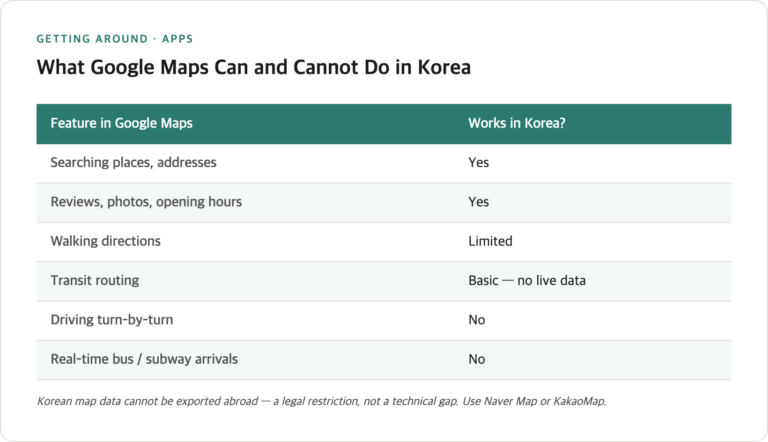
- If your pickup point is Hongdae, Sinchon, Myeongdong, or Dongdaemun for the Yongpyong shuttle, have a backup plan to reach Sports Complex Station on your own. A taxi app like Kakao T is the practical fallback if you miss the feeder pickup, since Google Maps doesn’t route reliably inside Korea.
- Don’t price a trip off an English-language fee page without cross-checking the Korean one. High1’s English lift prices were confirmed to be roughly two seasons old at the time of this research; the gap in your actual cost could run into the tens of thousands of won for a family.
- If you’re traveling with a child near a resort’s age cutoff, check that specific resort’s own fee page for its age formula before assuming international age applies. Vivaldi Park explicitly uses Korean age; other resorts don’t specify.
- Budget the ski day as one line item in a broader Korea trip, not in isolation. Our breakdown of what a week in Korea costs gives a sense of where a shuttle-and-lift-ticket day fits against everyday spending.
Frequently Asked Questions
When do Korean ski resorts open for the 2026–27 season?
As of late September 2026, no major resort had confirmed an opening date. Resorts typically announce opening dates in mid-to-late November, once snowmaking and slope conditions allow, even though season passes and early-bird packages go on sale well before that. Last season, most resorts opened between late November and mid-December — but that is a reference point, not a forecast for this season.
Do foreigners pay more for the ski shuttle from Seoul?
At Vivaldi Park, yes. The resort runs a separate shuttle booking site specifically for foreign visitors, and that site’s own terms state the fare “may differ from domestic prices as it includes a service fee.” A separate Korean-language booking option exists on the same official page for those who can use it. I have not compared the two fares side by side — what is documented is the service fee, not a measured price difference.
Can my shuttle be cancelled after I book it?
At Vivaldi Park, the foreigner shuttle operator states that the bus will not operate if there are no bookings at all. Your own reservation makes the count non-zero, so that clause alone should not worry a booked passenger. The operator publishes no minimum-passenger threshold, so a thinly booked run is neither confirmed safe nor confirmed at risk. What is certain is the refund clock: no-shows and late cancellations are not refunded.
Can I get to a Korean ski resort without renting a car?
Yes, for the resorts covered here — Vivaldi Park, Konjiam, and Yongpyong all run shuttles from Seoul. The details vary: Vivaldi and Konjiam require advance reservations with cutoffs the day before, and Yongpyong’s shuttle involves a transfer at Sports Complex Station rather than a direct pickup from downtown Seoul.
Is my child considered a “child” for Korean lift ticket pricing?
It depends on the resort and, for at least one resort, on which age system is used. Vivaldi Park applies a child rate to ages 13 and under, calculated by Korean age rather than international age — a real difference for a child near that cutoff. Other resorts list an age range without specifying the calculation method, so check each resort’s own fee page directly.
How much does a lift ticket cost in Korea?
It varies by resort and ticket length, and changes each season. As one example, High1’s Korean-language page lists 2025–26 all-day lift tickets at 104,000 KRW for adults and 92,000 KRW for children (as of 2026) — noticeably higher than the figures on High1’s own English-language page, which was still showing an older season’s pricing at the time of this research. Check the resort’s current Korean-language fee page, or have it translated, rather than relying on an English one for exact numbers.
Is the X6+ season pass worth buying for a short visit?
Almost certainly not for a one- or two-day trip. It’s a season-long pass covering six resorts, priced and marketed toward residents and frequent visitors, sold through the NOL platform. For a short ski trip, a single-resort day or multi-day lift ticket is the more relevant purchase.
Related Questions
- Incheon Airport to Seoul: Every Option, Including the Night Bus
- Booking KTX: Refund Windows and the Standing-Seat Trade-off
- Seoraksan and Jirisan Shelter Reservations: How Korea’s Lottery System Works