How Drinking Nights Work in Korea — Rounds, the Bill, and Saying No
Last Updated on August 23, 2026
Quick Answer
A Korean drinking session is rarely one stop at one bar. It moves through rounds (차, cha) — dinner, then a second venue, sometimes a third — with food at every stage and glasses poured for each other rather than self-served. Splitting the bill often runs through a KakaoPay or Toss settlement request rather than cash on the table, and refusing a drink is more accepted than most guides suggest: national survey data puts the actual refusal rate above one in four.
The Full Answer
Each part of a Korean drinking night has its own detailed guide on this site — soju and beer, makgeolli, anju food, the hangover, who can legally drink and where. This page doesn’t repeat any of that. It covers the layer underneath: how the night is structured, who pays, and what happens if you’d rather stop — the mechanics English guides tend to skip, from how a bill gets settled when a phone comes out instead of cash, to what the real numbers look like when someone tries to say no at a work dinner.
How the Night Moves — Rounds, Not One Stop
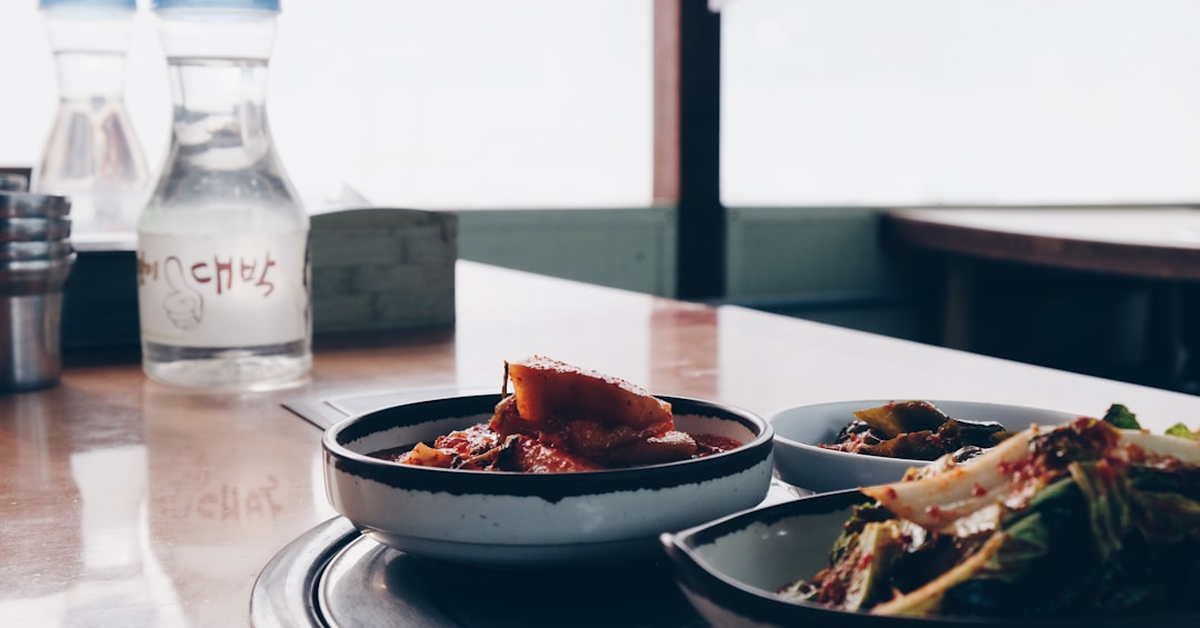
The first round (1차, il-cha) is usually dinner with alcohol alongside it — soju or beer, with food that isn’t an afterthought. See the soju and beer guides for what’s actually in the bottle, and the anju guide for why food arrives with, not after, the drinks.
If the group keeps going, a second round (2차, i-cha) moves to a different venue — a bar, a pojangmacha street tent, or somewhere serving makgeolli instead. A third round (3차, sam-cha) is common enough to have its own name but isn’t guaranteed. Nobody formally proposes moving — someone just suggests it, and the group either follows or starts leaving. Peeling off after the first round is normal and needs no excuse beyond an early morning.
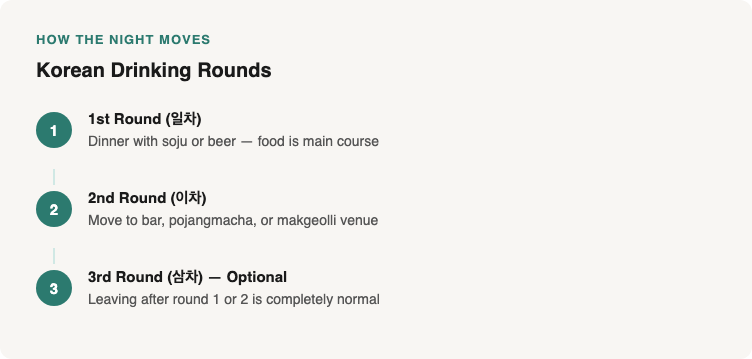
Table Etiquette — Who Pours, and How
The etiquette that matters is less about your own glass than everyone else’s.
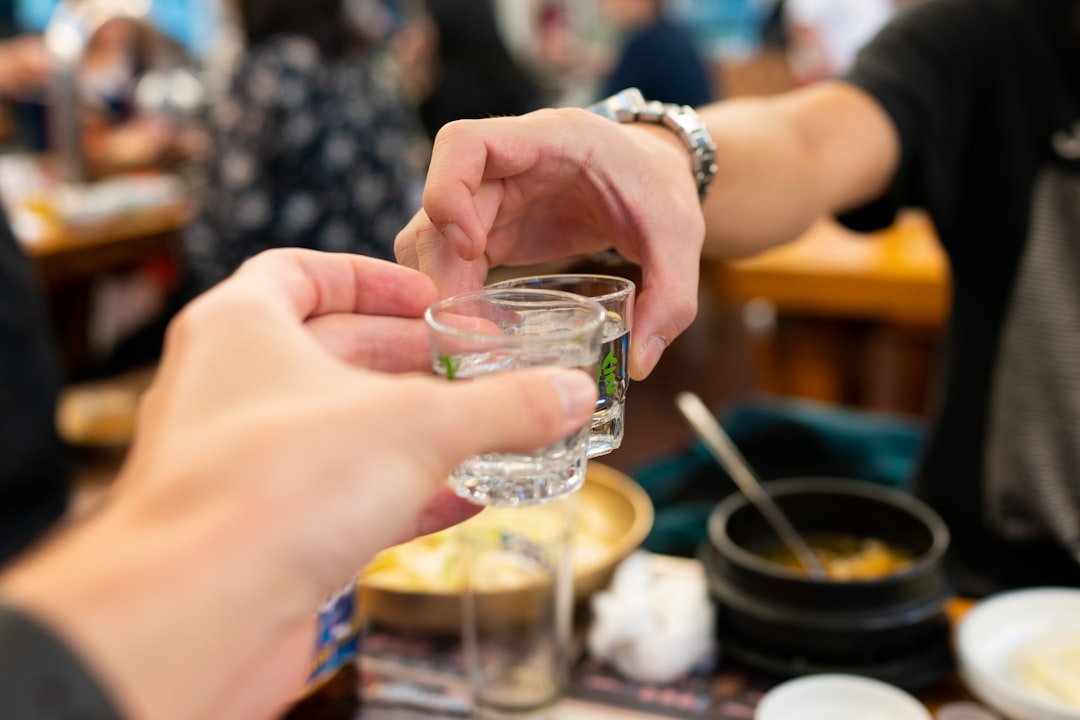
- Never pour your own glass — someone fills it, you fill theirs.
- Use two hands pouring for, or receiving from, someone older or more senior.
- Turn slightly away when drinking in front of a senior.
- Watch other glasses, not just your own — refilling others is the real job at the table.
This part is already well covered by English guides, so it stays brief here. Where this page adds something is below.
Splitting the Bill — Why It’s Rarely Just Cash on the Table
Dutch-pay exists in Korea but isn’t the automatic default. At a casual gathering, whoever suggested the outing, or the oldest person present, often covers a round, with an unspoken expectation someone else gets the next one. At a work dinner, the most senior person present typically pays, at least for the first round.
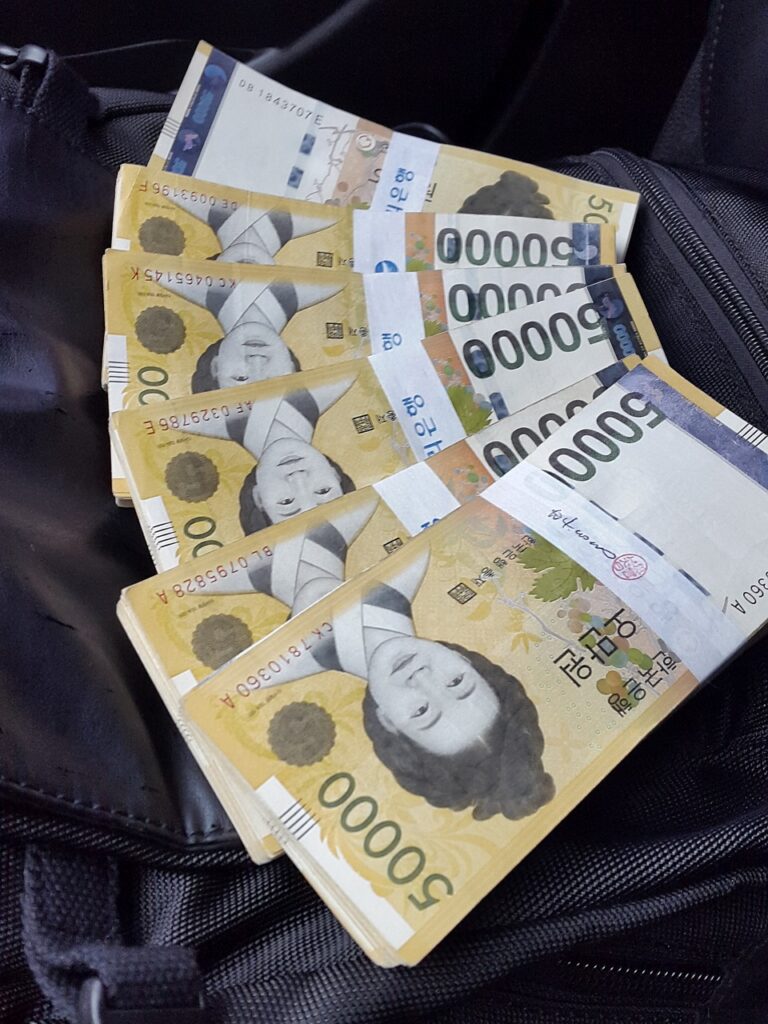
Where it gets specific for a visitor is the mechanism when a bill is split. Almost everyone uses Kakao Talk’s built-in “정산하기” (settle-up) feature, tied to KakaoPay, or Toss’s own dutch-pay tool — a friend opens the app, enters the total, and sends each person a request for their share.
Local tip — Both KakaoPay and Toss settle to a registered Korean bank account. A short-term visitor without one generally has no straightforward way to receive a settlement request, even though paying one is often easier. I looked for an official KakaoPay or Toss policy page stating this outright and found none — the constraint follows from how account opening works, not a company statement, so treat it as a practical pattern rather than a confirmed rule. Longer-term residents with a foreigner registration card can usually open an account; this is a short-trip problem specifically.
The fix is simple: if you can’t receive the request, offer cash on the spot. Nobody treats that as unusual — the app is a convenience for people with Korean accounts, not a requirement.
Saying No — Does Refusing a Drink Actually Work?
English guides are thorough on how to refuse a drink — hand over the glass, a polite line, a medical excuse. What they leave out is whether it actually works, and how often people do it.
A nationwide poll gives an answer. In September 2024, the labor rights group Jikjanggapjil 119 (직장갑질119) commissioned Global Research to survey 1,000 employed adults nationwide (95% confidence, margin of error ±3.1 points). 23.4% said they’d been pressured to drink at a hoesik in the past year. Of those, 72.9% went along with it — but 27.1% refused. The refusal rate wasn’t flat by age: highest among workers in their 20s at 36.7%, lowest among those in their 40s at 18.9%.
Local tip — More than one in four employees pressured to drink at a hoesik actually refused, and among workers in their 20s it was more than one in three. I read the original write-ups in Korean directly — Kyeonggi Ilbo and Maeil Labor News both carried the same figures from the same poll, a genuine cross-check rather than one outlet re-quoting another. Neither number appears in the English articles on hoesik culture this research found; those cite different, older surveys (JobKorea 2020; Seoul city surveys from 2023 and 2025) that asked broader questions about hoesik frequency, not this specific pressure-and-refusal question.
One caveat: the same organization’s October 2025 follow-up survey produced a lower figure, 15.4%, for a differently worded question — “pressured into hoesik attendance or drinking” combined, rather than the 2024 survey’s narrower drinking-pressure question. I checked whether that reads as “the rate fell in a year” and concluded it shouldn’t — the question changed too much between surveys to compare directly. This article uses the 2024 figures only.
None of this means Korean drinking culture is broadly coercive — hoesik frequency has been falling for years and alcohol spending has dropped for ten straight quarters. The useful part for a visitor at the table is the opposite of alarming: refusing is common enough that it works more often than you might assume.
What to Drink, and What Comes With It
| Drink | In one line | Detail |
|---|---|---|
| Soju | Clear spirit, now typically 15.7% rather than the ~20% older guides quote | Soju guide |
| Makgeolli | Milky rice brew, two distinct types | Makgeolli guide |
| Somaek | Soju and beer mixed, roughly 3:1 beer to soju | See soju / beer guides |
Ordering alcohol with nothing to eat is unusual — see the anju guide for what typically gets ordered alongside it. Convenience-store hangover drinks are food, not medicine, and of debatable effect; the real remedy is haejang-guk (해장국), covered in the hangover cures guide.
Out of scope here, covered elsewhere: who can legally drink, what ID works, and where public drinking is restricted — the drinking age guide covers the district-by-district no-drinking zones that arrived after 2024.
What You Need to Know
- The night is structured in rounds (차), not one long sitting at one bar. Leaving after the first round is normal.
- Pouring is social, not self-service — you fill others’ glasses, they fill yours, and seniority shapes who uses two hands for whom.
- Bill-splitting apps assume a Korean bank account. Without one, cash covers the same purpose.
- Refusing a drink works more often than it might seem — 27.1% of pressured employees refused in a 2024 national survey.
- Food comes with drinking, not after it — ordering alcohol alone is the unusual choice.
Practical Tips
- Expect the night to move, not stay in one place. A second venue after dinner is common; a third is optional.
- Let others pour for you, and watch their glasses too. Refilling others is the actual job at the table.
- Carry some cash for settling up, in case an app-based split assumes a Korean account you don’t have.
- Say no early and directly rather than sipping through a round you’d rather skip — refusal is common enough that nobody treats it as strange.
- Order food alongside drinks by default. See the anju guide if unsure what to pick.
- Don’t assume every work dinner means heavy drinking — the pattern has loosened for years.
- Plan the way home before the second round. It’s harder to sort out afterward.
Frequently Asked Questions
What does “cha” (차) mean in Korean drinking culture?
A round of the night — 1차 (il-cha) is usually dinner with drinks, 2차 (i-cha) a second venue, and 3차 (sam-cha) a less common third stop. A group can stop after any round without it being unusual.
Do I have to keep drinking through every round?
No. Leaving after the first round is normal and needs no explanation beyond something practical, like an early start the next day.
How is the bill usually split in Korea?
It depends on the setting — a senior or the organizer often covers a round, with the expectation someone else covers the next. When a bill is deliberately split, it’s typically through a KakaoPay or Toss settlement request rather than cash at the table.
What if a friend sends me a KakaoPay or Toss request to split the bill?
Receiving one generally requires a linked Korean bank account, which most short-term visitors don’t have. Offering cash instead is the normal workaround.
Can I actually refuse a drink without it being awkward?
More often than most guides imply. In a 2024 national survey of 1,000 employed adults, 27.1% of those pressured at a work dinner said they refused — 36.7% among workers in their 20s.
Is hoesik (회식) drinking pressure still common?
It’s been declining for years — hoesik frequency and alcohol spending have both dropped, which is why the 2024 survey above is useful context rather than a claim it’s gone.
Do I need to order food when I’m drinking?
Effectively yes. Ordering alcohol with nothing to eat is unusual, and some venues expect food alongside drinks. See the anju guide.
Related Questions
- Drinking Age in Korea: ID Rules, Seller Penalties, and No-Drinking Zones
- Soju in 2026: It’s Weaker Than Your Guidebook Says
- Korean Hangover Cures: What Actually Works