Pojangmacha: How to Read a Korean Street-Food Tent (and Not Get Ripped Off)
Quick Answer
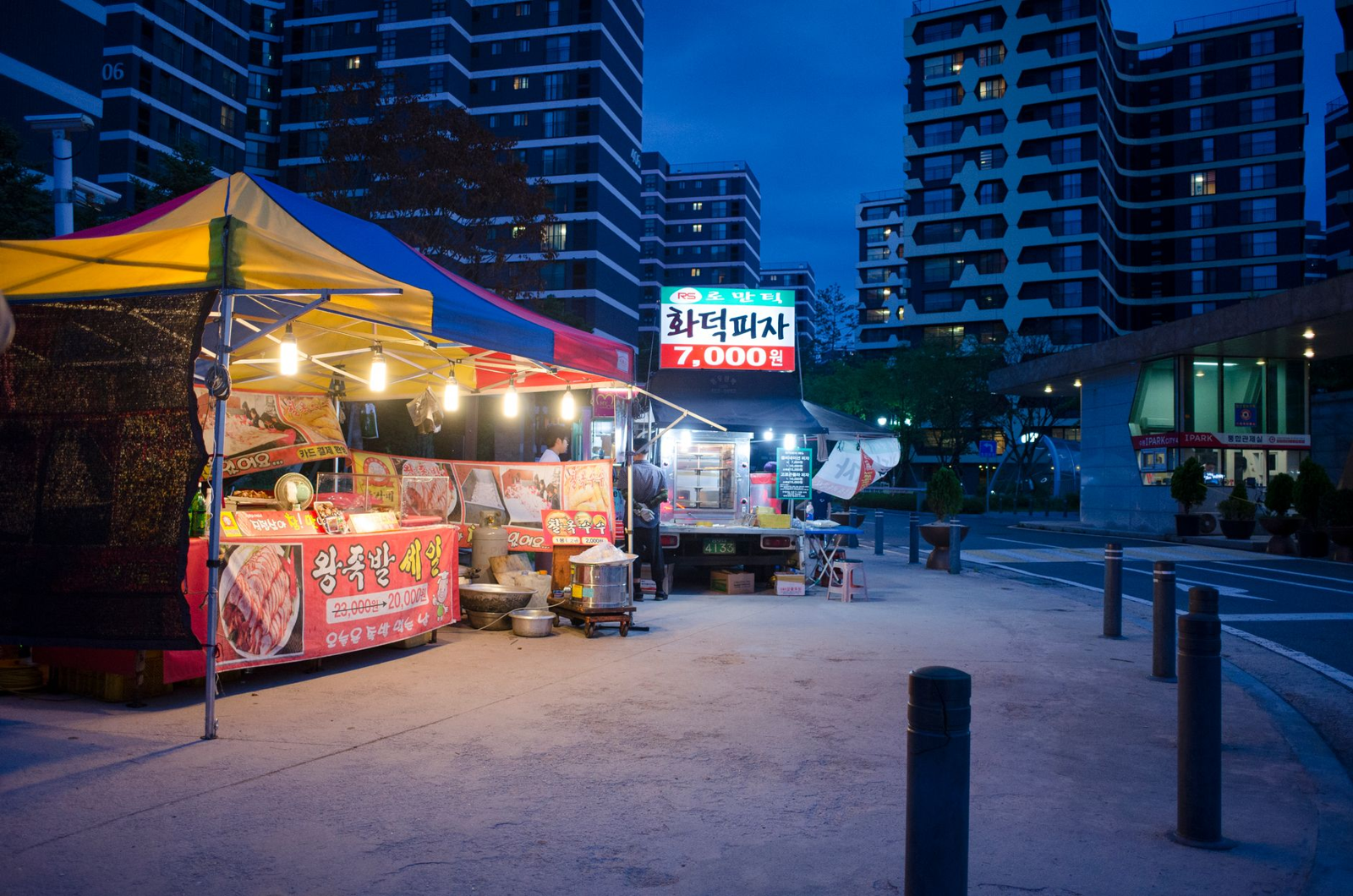
A pojangmacha is a tented street-food stall with plastic stools, savoury anju, and soju flowing late into the night. Two things intimidate visitors: they’re almost always cash-only (bring ₩30,000–50,000), and prices often aren’t posted, which raises the fear of being overcharged. The local trick for judging a fair tent: look for one full of Korean office workers or local regulars — they wouldn’t be there if it were a rip-off.
The Full Answer
The pojangmacha is one of the most atmospheric things to do in Korea at night — and one of the most daunting to walk into cold. No English menu, no printed prices, cash only, and an unspoken etiquette. That combination makes visitors hover outside rather than duck in.
The fear of overpaying is the real barrier, and it’s addressable. I checked both the English coverage and the Korean-language framing in July 2026. The English guides handle the mechanics well; what they add less of is the judgement — how a Korean decides which tent is fair and which to avoid.
Cash, and the Payment Reality
Sort this out before you sit down.
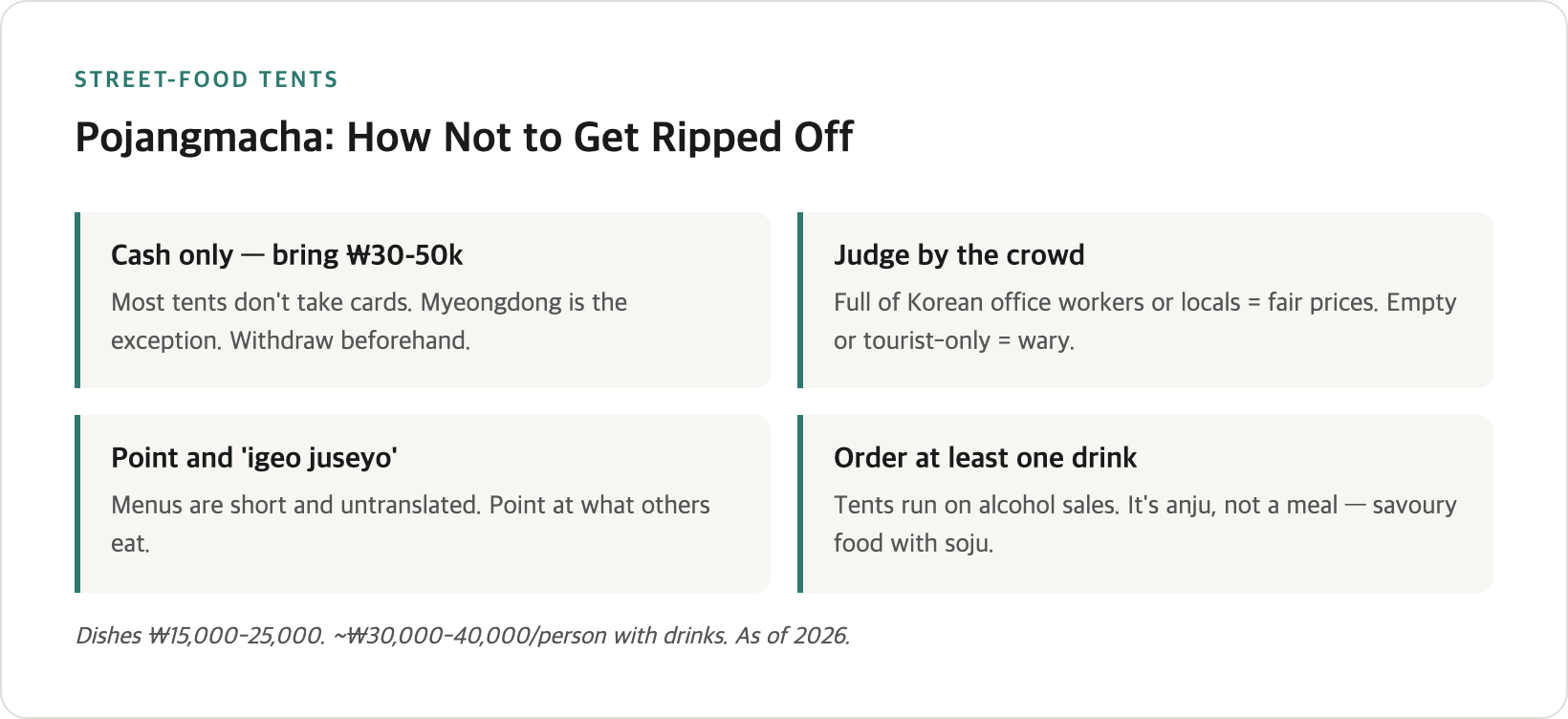
Local tip — The vast majority of pojangmacha are cash-only — bring around ₩30,000–50,000 per person to be safe. There are exceptions: Myeongdong tents take cards more often than elsewhere, making it the easiest area for visitors who haven’t got Korean cash yet. And a newer trend is QR-code and bank-transfer payment, which doesn’t help a foreign visitor without a Korean bank account. Assume cash and you won’t be caught out.
Withdraw from a foreign-card ATM before heading out, since the tent won’t have one.
The Fair-Price Trick
This is the judgement English guides underplay.
Local tip — Prices are often unposted, which feeds the fear of a tourist markup. The local way to judge: look at who’s inside. A tent packed with Korean office workers in suits or groups of local friends is a tent Koreans trust — they wouldn’t eat there if it overcharged. An empty tent, or one full only of tourists, is the one to be wary of. Follow the locals, literally.
Most dishes run ₩15,000–25,000, and ₩30,000–40,000 per person covers a generous evening with drinks. If a price feels wildly above that, it probably is.
How to Order Without the Language
The menu barrier is smaller than it looks.
- Point at what the next table is eating, or at a photo menu
- Say “igeo juseyo” (이거 주세요) — “this, please”
- Menus are short and rarely translated — that’s normal
- Owners are usually happy to help — don’t be shy about gesturing
Local tip — Don’t expect rice or a “meal” — pojangmacha food is anju, savoury and salty, built to go with soju. Ordering a bowl of rice misreads the format. Come for tteokbokki, eomuk (fish cake), fried snacks and stews, paired with a drink, not for dinner in the Western sense.
The Unspoken One-Drink Rule
Like other Korean drinking spots, there’s a minimum.
Local tip — Pojangmacha rely on alcohol sales, so a bottle of soju or beer per person is the unspoken minimum — ordering only food can read as missing the point. This is the same anju logic as elsewhere: food and drink go together, and the venue’s economics assume you’ll drink. Order at least one drink, and it’s not really a place for teetotal dining.
Solo Dining and Etiquette
The tent is more welcoming than it looks.
- Solo is fine — order a single serving and eat quietly
- Sharing stools with strangers is normal in a packed tent
- Chat with the owner if you like — many enjoy it
- Winter tents are enclosed and heated; the tarps come down against the cold
Local tip — In winter, pojangmacha tents are fully enclosed with the tarps sealed and often a heater running — the cold-weather version is cosier, not worse. A steaming bowl of eomuk broth in a sealed tent on a freezing Seoul night is one of the better local experiences, and it’s when Koreans themselves seek them out.
What You Need to Know
-
Cash only at most tents — bring ₩30,000–50,000 per person.
-
Myeongdong takes cards more often, if you’re short on cash.
-
Judge fairness by the crowd — locals and office workers mean fair prices.
-
Point and say “igeo juseyo” — menus are short and untranslated.
-
It’s anju, not a meal — savoury food to go with drinks.
-
Order at least one drink — the venue runs on alcohol sales.
Practical Tips
-
Bring ₩30,000–50,000 cash — most tents don’t take cards.
-
Withdraw beforehand from a foreign-card ATM.
-
Pick a tent full of locals — the fair-price signal.
-
Point or say “igeo juseyo” to order.
-
Order at least one drink — it’s expected.
-
Try Myeongdong first if you haven’t got cash yet — cards more common.
-
Go in winter for the cosy sealed-tent experience.
Frequently Asked Questions
Do pojangmacha take cards?
Most are cash-only. Bring ₩30,000–50,000 per person. Myeongdong tents accept cards more often, and some newer stalls use QR or bank transfer, which doesn’t help foreign visitors.
How much does a pojangmacha cost?
Dishes run ₩15,000–25,000, and ₩30,000–40,000 per person covers a generous evening with drinks.
How do I know if a tent is overcharging?
Look at who’s inside. A tent full of Korean office workers or locals is trusted; an empty one, or one full of only tourists, is riskier.
How do I order if I don’t speak Korean?
Point at what others are eating or at a photo menu, and say “igeo juseyo” (this, please). Menus are short and rarely translated.
Do I have to drink alcohol?
Effectively yes — pojangmacha run on alcohol sales, so a drink per person is the unspoken minimum. It’s not really a place for teetotal dining.
Can I go alone?
Yes, solo dining is common. Order a single serving and eat quietly; sharing stools with strangers in a packed tent is normal.
Related Questions
- Anju: Why You Can’t Just Order Drinks in Korea
- Cash or Card in Korea? The Apps That Won’t Take Your Foreign Card
- Drinking in Korea: A Practical Guide for Visitors
- Korean Beer: Local Brands, Strengths, and the 4-for-₩10,000 Deal
- Makgeolli: Which Bottles You Can Shake and Which You Can’t
- Korea Customs Food Rules — Why Enforcement Got Stricter in 2026