Soju in 2026: It’s Weaker Than Your Guidebook Says
Quick Answer
Soju is Korea’s clear, slightly sweet distilled spirit, sold everywhere in green bottles for around ₩1,900 at convenience stores (as of 2026). Nearly every English guide still calls it “around 20% alcohol.” That is out of date: the major brands have been cutting strength for years, and in 2026 the mainstream sits at 15.7% — Chamisul and Jinro both dropped to it this year. The etiquette rules matter, but the strength figure most travellers carry is simply wrong now.
The Full Answer
Soju is the drink every visitor tries, and the guidance around it has a strange quality: the cultural notes are usually fine, but the basic facts drift out of date because the product keeps changing.
The strength is the clearest example. “Soju is about 20%” was true a decade ago. It has been falling steadily since, and the low-alcohol trend accelerated in 2026. I checked the manufacturers’ announcements and Korean drinks coverage in July 2026, and the headline number in most English guides is now a full four or five points too high.
That is not a trivia point — it changes how the night goes, especially when soju is being poured for you in rounds.
How Strong Soju Actually Is Now
| Brand | Strength (2026) | Note |
|---|---|---|
| Chamisul Fresh | 15.7% | Cut from 16% in June 2026 |
| Jinro | 15.7% | Cut from 16% in February 2026 |
| Chum-Churum | 16% | Plus a 20% “Classic” relaunched April 2026 |
Local tip — The mainstream soju you will be handed in 2026 is 15.7%, not the ~20% every guidebook quotes. Brands have been dropping strength for years — driven by low-alcohol taste preferences and cost — and 15.7% is now the default. If you have read that soju is roughly as strong as it used to be and paced yourself accordingly, you have the wrong number.
Local tip — A few products buck the trend — Chum-Churum relaunched a 20% “Classic” in 2026 for drinkers who want the old strength. So “soju” is no longer a single number: check the bottle, because the gap between a 15.7% mainstream bottle and a 20% classic is real over a few rounds.
What It Costs
- Convenience store: around ₩1,900 a bottle after 2026 price cuts on Chamisul and Chum-Churum
- Restaurant: typically ₩4,000–6,000, the standard markup
- Mart / supermarket: cheapest, often under ₩1,500
Local tip — Convenience-store soju was cut to about ₩1,900 in 2026 — cheaper than most guides state. The restaurant price is two to three times that, which is normal; you are paying for the table, the anju and the setting, not being overcharged.
The Etiquette That Actually Matters
The pouring rituals are real, and getting them roughly right is appreciated. The essentials:
- Never pour your own glass. Someone else fills yours; you fill theirs
- Two hands when pouring for, or receiving from, someone older or senior
- Turn away slightly when drinking in front of a senior — a small gesture of respect
- The first glass is often downed together
Local tip — The rule guides push hardest — “never pour your own” — is real, but the one they underplay is watching others’ glasses. The social job at a Korean table is keeping others’ cups filled, not signalling for your own. Once you internalise that, the etiquette runs itself, and topping up a senior’s glass before it empties reads as far more fluent than any single formal gesture.
If you are underage by Korean counting, none of this applies — and the drinking age uses year age, so check the birth-year rule if you are near the line.
How to Drink It
- Neat, chilled, in small glasses — the standard
- Somaek — soju mixed into beer, the national combination
- With food — soju is a mealtime drink, rarely drunk alone. Pair it with anju
Local tip — Somaek ratios are debated endlessly, but the common convenience-store starting point is roughly 3 parts beer to 1 part soju, adjusted to taste. With soju now at 15.7%, a somaek is milder than the same mix was a few years ago — another reason the old strength assumptions lead people astray.
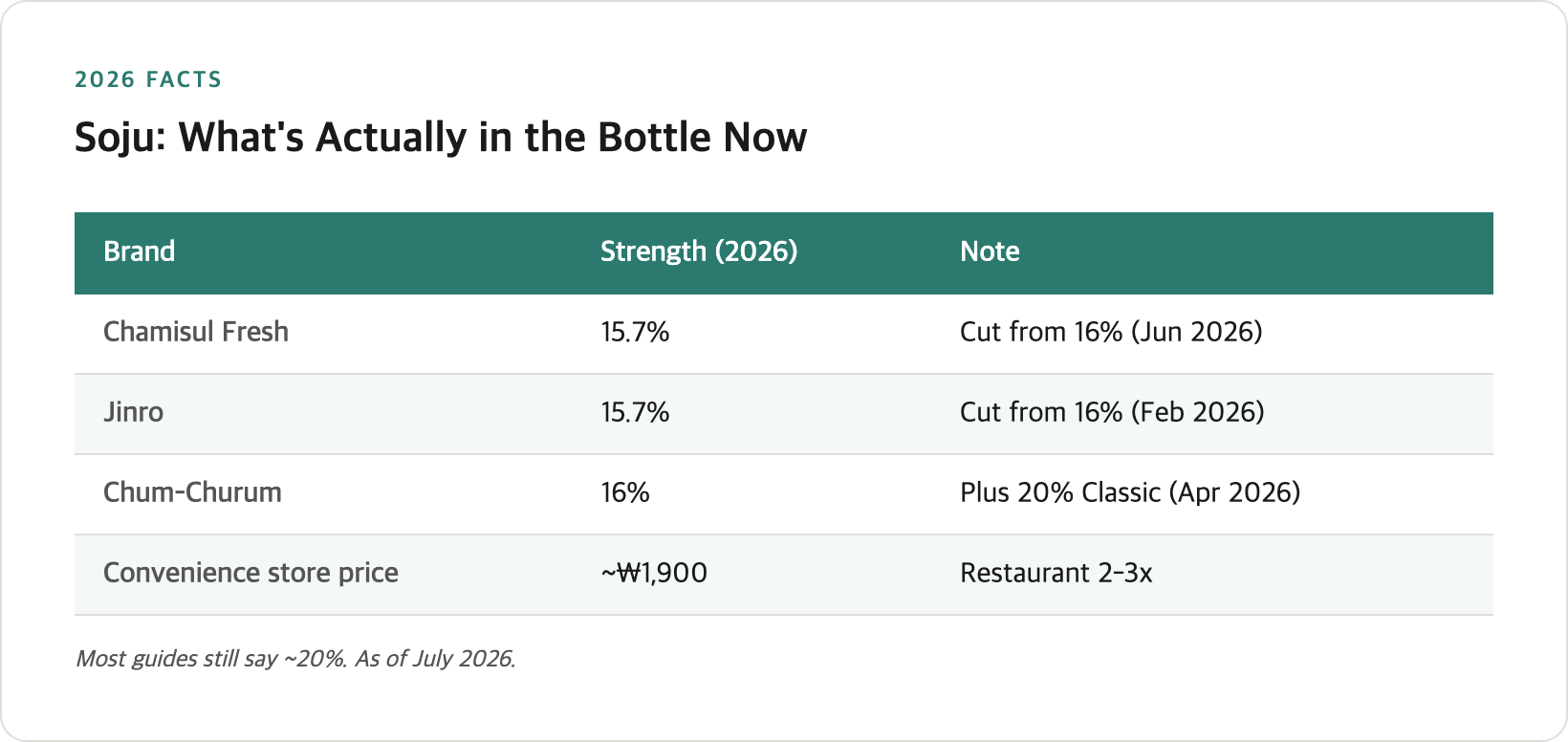
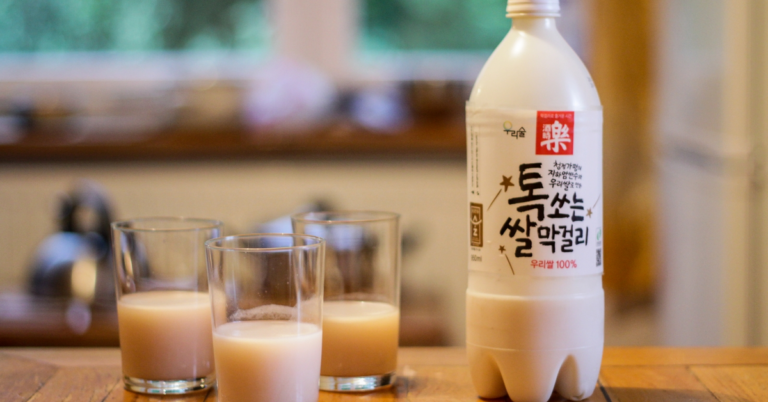
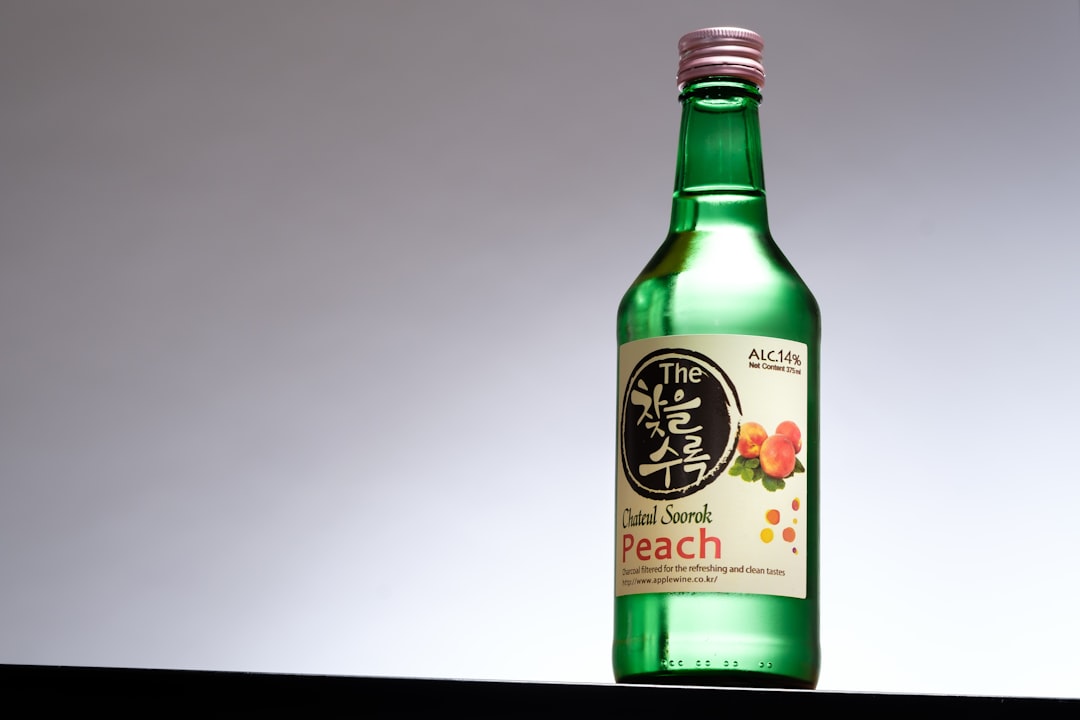
Photo by Neil Gardose on Unsplash
What You Need to Know
-
Mainstream soju is 15.7% in 2026, not the ~20% most guides quote.
-
Some “classic” bottles are still 20%. Check the label — soju is no longer one number.
-
Convenience-store bottles fell to about ₩1,900 in 2026.
-
Never pour your own glass, and keep others’ filled.
-
Use two hands with seniors, pouring and receiving.
-
It is a mealtime drink — pair it with food, not sipped alone.
Practical Tips
-
Assume 15.7%, not 20%. Pace for the real strength.
-
Check the bottle if you want the stronger classic — it still exists.
-
Buy from convenience stores or marts at ₩1,900 or less; restaurants charge 2–3×.
-
Let someone else fill your glass, and fill theirs.
-
Two hands with seniors, and turn slightly to drink.
-
Try somaek at roughly 3:1 beer to soju.
-
Pair it with anju — soju is not a solo sipping drink.
Frequently Asked Questions
How strong is soju?
Mainstream brands are 15.7% as of 2026, down from around 16% last year and roughly 20% a decade ago. Some “classic” versions are still 20%, so check the label.
How much does soju cost?
About ₩1,900 at convenience stores after 2026 price cuts, cheaper at marts, and ₩4,000–6,000 at restaurants.
What is somaek?
Soju mixed with beer, roughly 3 parts beer to 1 part soju. It is Korea’s most popular drink combination.
Do I really have to follow the pouring etiquette?
Getting it roughly right is appreciated. The core rules: never pour your own glass, use two hands with seniors, and keep others’ glasses filled.
Is soju drunk on its own?
Rarely. It is a mealtime drink, paired with food, and drinking it alone is more associated with solo drinking (honsul) than a typical night out.
What’s the drinking age for buying soju?
19 by Korean year age, which starts on 1 January of the year you turn 19. See the drinking age guide.
Related Questions
- Makgeolli: Which Bottles You Can Shake and Which You Can’t
- Korean Beer: Local Brands, Strengths, and the 4-for-₩10,000 Deal
- Drinking Age in Korea: Who Can Legally Drink
- Pojangmacha: How to Read a Korean Street-Food Tent (and Not Get Ripped Off)
- Korean Hangover Cures: What Actually Works (and What’s Just a Drink)