Korean Hangover Cures: What Actually Works (and What’s Just a Drink)
Quick Answer
Korea has a whole shelf of hangover-relief drinks — Condition, Yeomyeong 808, Morning Care, Sanghwaehwan — sold at every convenience store, a fast-growing market worth over ₩370 billion as of 2026. English guides recommend them enthusiastically. What they leave out: none is an approved medicine. They are classified as ordinary food, and Korean doctors are openly sceptical that they do much. The thing Koreans actually rely on is not a drink at all — it is haejang-guk, hangover soup.
The Full Answer
The Korean hangover drink is a genuinely interesting piece of the country’s drinking culture, and it deserves to be explained rather than just recommended. English guides tend to name-drop Yeomyeong 808 and stop there, as if it were a proven cure you can buy for ₩3,000.
The Korean-language picture is more honest and more useful. I checked the market coverage and medical commentary in July 2026, and two things stand out that no English guide mentions: the regulatory status, and what people eat when the drinks don’t do it.
They Are Food, Not Medicine
This is the framing that changes how you should read the whole category.
Local tip — No hangover-relief product in Korea is approved as a medicine — they are all classified as ordinary food, and cannot legally claim to cure a hangover. Korean medical commentary is blunt about it: one widely cited assessment suggested a plain energy drink does about as much as the branded products. English guides present these as effective cures; the honest version is that they are pleasant, mildly helpful drinks with no proven cure behind them.
That does not make them useless — hydration, sugar and B vitamins genuinely help — but it reframes the ₩3,000 bottle as “a functional drink” rather than “a cure in a bottle.”
The Main Products
| Product | Character |
|---|---|
| Condition | Market leader (~50%), sweet-sour, energy-drink-like |
| Yeomyeong 808 | Herbal, 140ml, tastes like Korean medicine tea |
| Morning Care | Milder, widely stocked |
| Sanghwaehwan | Chewable jelly format |
| Kkaesukkang | Newer entrant |
Local tip — Condition dominates with around half the market, but Yeomyeong 808 — the one English guides single out — is the outlier: it is larger at 140ml and tastes strongly of herbal medicine (ssanghwa-tang), which visitors either love or recoil from. If you want the mildest, energy-drink-style option, Condition is the safer first try; 808 is the acquired taste. All of them sit on the same shelf at any convenience store, usually near the till.
When to Take Them
The folk wisdom, which the products encourage, is to take them before or during drinking rather than only after.
- Before / during: the common approach — one before you start, or between rounds
- After: still taken, though arguably the least effective timing
- Format: drinks, jellies and pills all exist; the drinks are most common
Local tip — Koreans typically take these before or during drinking, not just the morning after — the theory being that supporting the liver through the night beats trying to rescue it afterwards. Whether or not the science holds, if you are going to use one, following the local timing costs nothing.
What Actually Gets Eaten
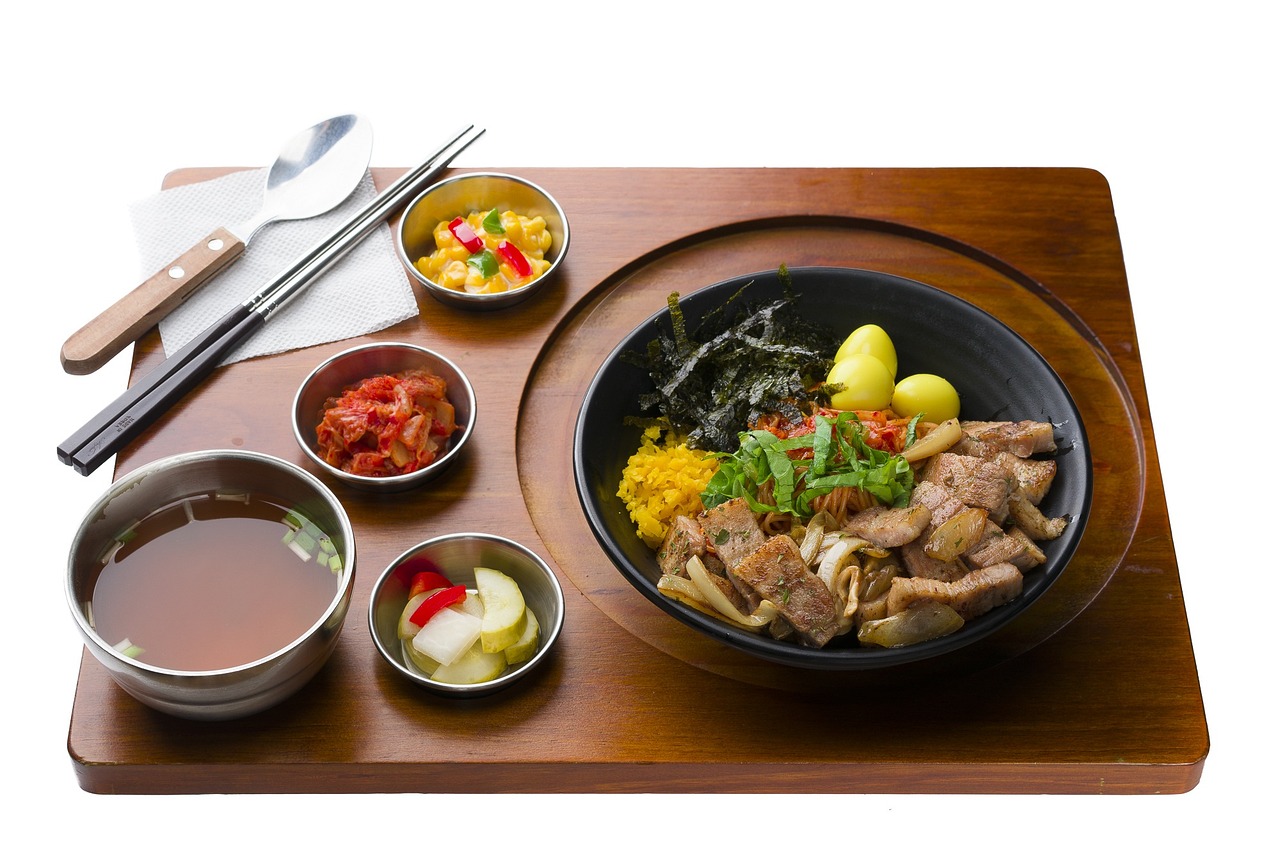
The real Korean hangover remedy is food, specifically soup.
Local tip — The genuine go-to is haejang-guk (해장국) — literally “soup to chase away a hangover” — a hot, savoury broth eaten the morning after. There are whole restaurants dedicated to it, many open early or 24 hours precisely for this purpose. Ask a Korean about hangovers and you will hear about soup long before you hear about a convenience-store drink. Common versions use ox-bone broth, congealed blood (seonji), or bean sprouts.
Bean-sprout soup (kongnamul-guk) and various clear, spicy broths do the rehydrating, warming work that the drinks only gesture at. If you have one rough morning in Korea, the soup is the more authentic — and probably more effective — choice.
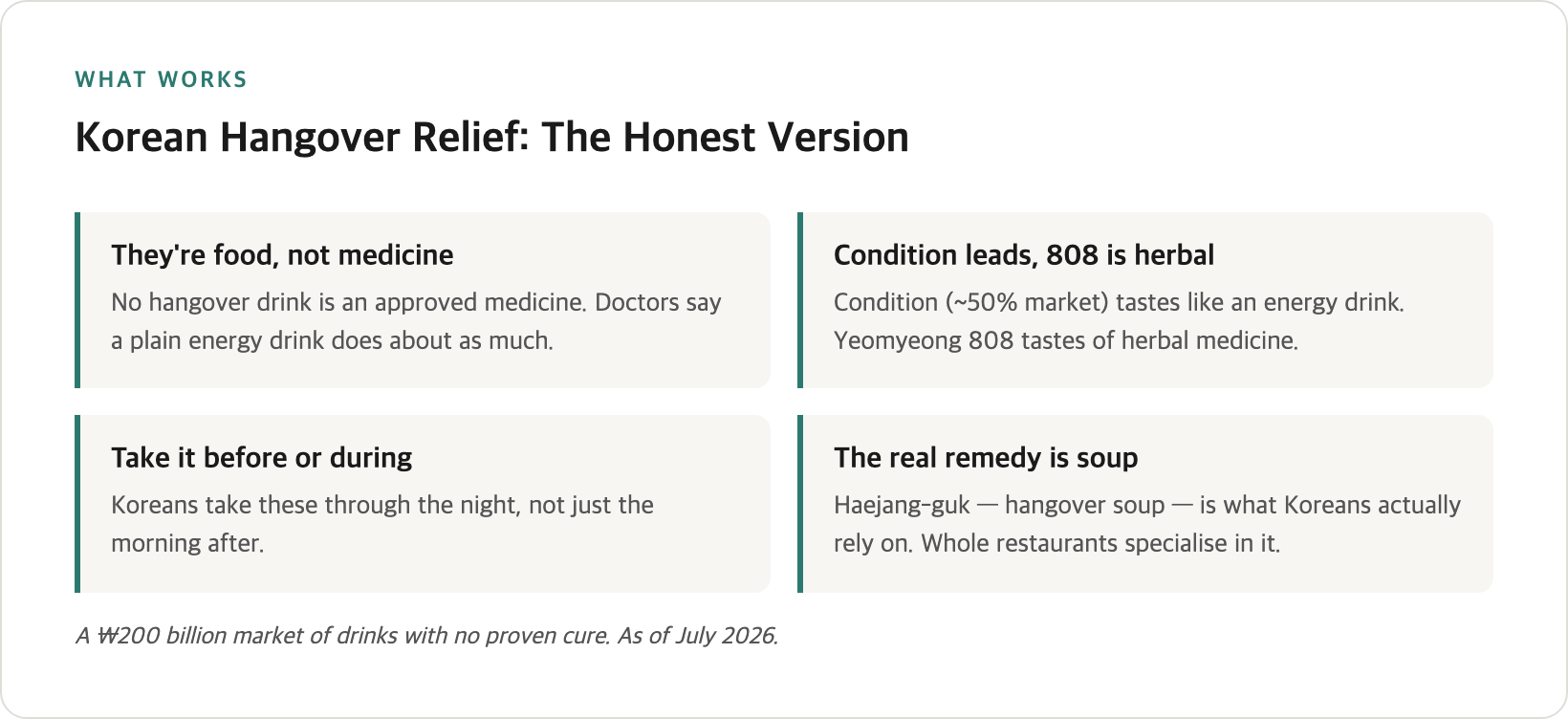
Photo by deligraphy on Pixabay
What You Need to Know
-
No hangover drink is an approved medicine — all are classified as food.
-
Doctors are sceptical. A plain energy drink may do about as much.
-
Condition leads the market; Yeomyeong 808 is the herbal, acquired-taste one.
-
Koreans take them before or during drinking, not just after.
-
The real remedy is haejang-guk, hangover soup, eaten the morning after.
-
Hangover-soup restaurants often open early or run 24 hours for this exact purpose.
Practical Tips
-
Treat the drinks as functional beverages, not cures. They help a little.
-
Try Condition first for the mild, energy-drink taste; 808 is herbal and strong.
-
Take one before or during drinking, as Koreans do, not only after.
-
Hydrate and eat — the boring advice still outperforms the bottle.
-
Seek out haejang-guk the morning after for the authentic remedy.
-
Look for 24-hour or early hangover-soup places near nightlife districts.
-
Eat while you drink — anju softens the morning, part of the wider drinking culture.
Frequently Asked Questions
Do Korean hangover drinks actually work?
They are classified as food, not medicine, and cannot claim to cure a hangover. Korean doctors are sceptical, with some suggesting a plain energy drink does about as much. Hydration, sugar and B vitamins help, but there is no proven cure.
Which Korean hangover drink is best?
Condition leads the market with a mild, energy-drink taste. Yeomyeong 808 is the one guides mention most, but it is herbal and an acquired taste.
When should I take a hangover drink?
Koreans typically take them before or during drinking, not only the morning after.
What do Koreans really do about hangovers?
They eat haejang-guk, a hot savoury soup, the morning after. Whole restaurants specialise in it, often open early or 24 hours.
What is haejang-guk made of?
Versions vary — ox-bone broth, congealed blood (seonji), or bean sprouts are common bases, all hot, savoury and rehydrating.
Are the drinks a scam?
No, but they are oversold. They are pleasant functional drinks, not the cures some guides imply.
How does this fit Korean drinking culture?
Heavily — see the drinking in Korea overview. Eating anju through the night is the real prevention.
Related Questions
- Soju in 2026: It’s Weaker Than Your Guidebook Says
- Korean Beer: Local Brands, Strengths, and the 4-for-₩10,000 Deal
- Drinking in Korea: A Practical Guide to the Culture
- Pojangmacha: How to Read a Korean Street-Food Tent (and Not Get Ripped Off)
- Makgeolli: Which Bottles You Can Shake and Which You Can’t