Drinking Age in Korea: ID Rules, Seller Penalties, and No-Drinking Zones
Last Updated on August 22, 2026
Quick Answer
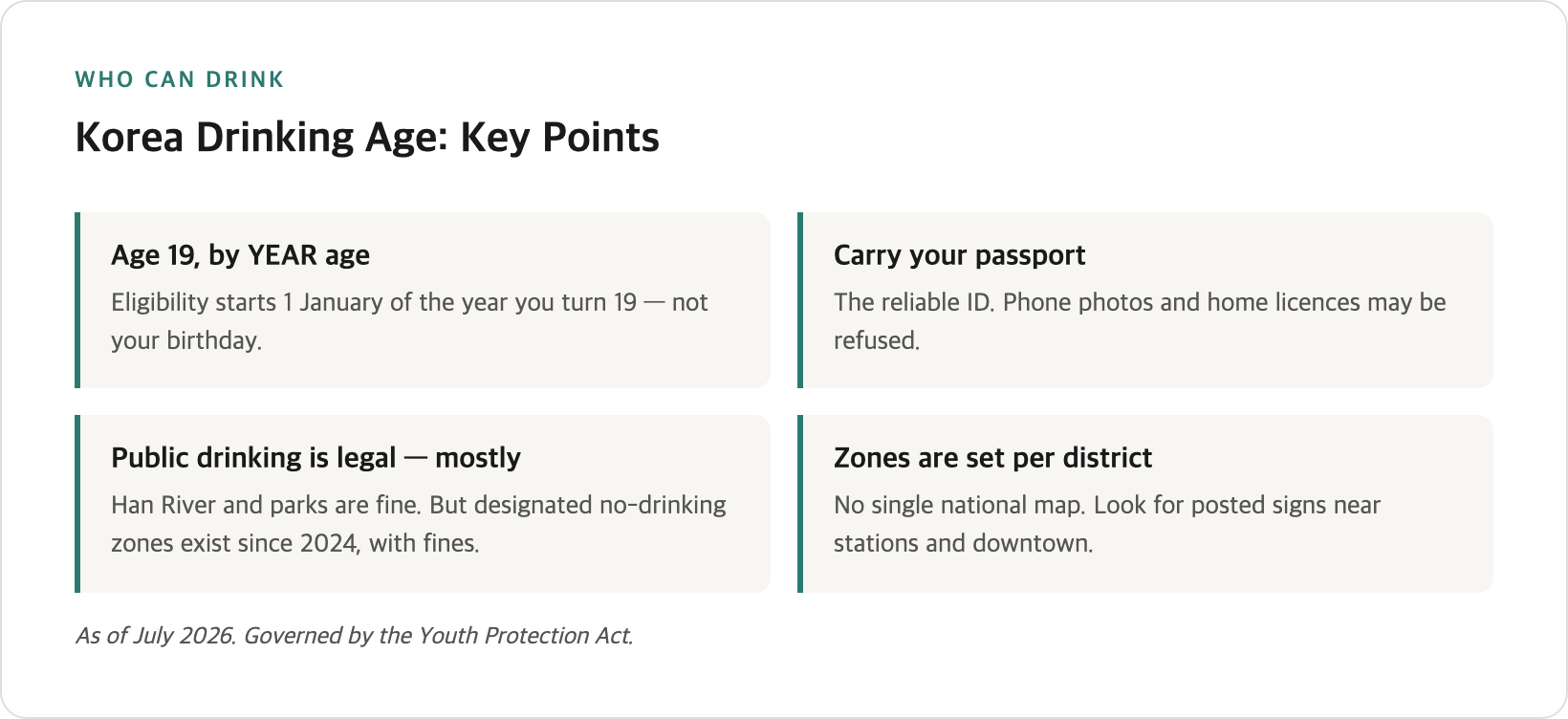
Korea’s drinking age is 19, counted by year age from 1 January of the year you turn 19 — the counting mechanics are covered in how Korean age works, not here. What actually matters at the counter: a passport or foreigner registration card is the ID that works, staff who skip the check face real penalties rather than a warning, and a growing number of districts now fine public drinking in posted no-drinking zones. As of August 2026.
The Full Answer
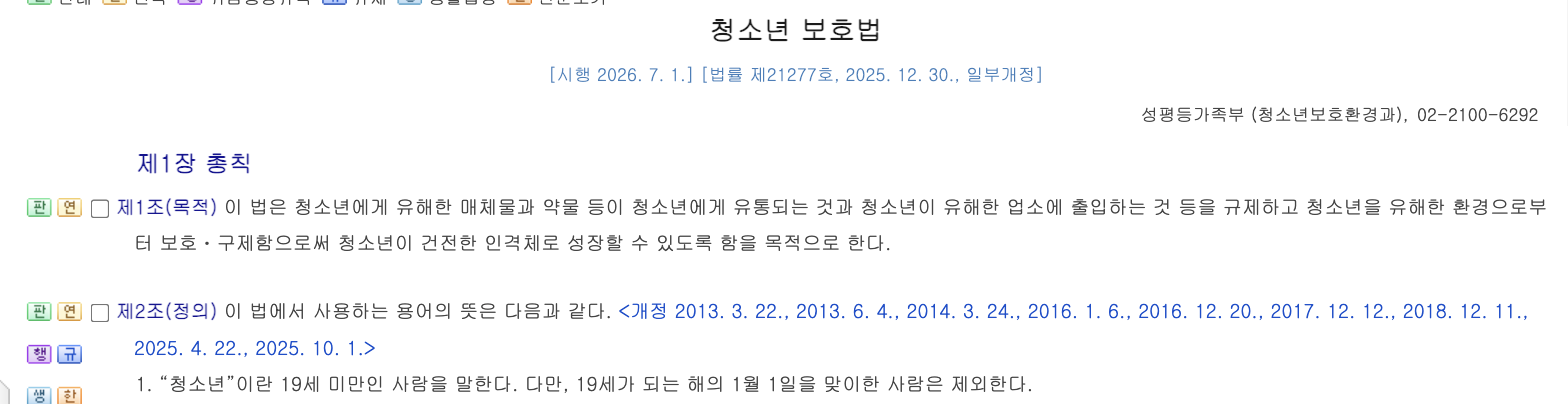
The “how old” question has a short answer and a link, not a section. Korea’s drinking age is 19 by year age, and the counting mechanics live in the age guide rather than here. Under the Youth Protection Act (청소년보호법), a “청소년” is legally defined as anyone under 19 — except that a person stops counting as a minor from 1 January of the year they turn 19, per Article 2, Section 1 of the statute itself. That cutoff is written directly into the legal definition, not bolted on as a separate “year age” rule by a secondary source.
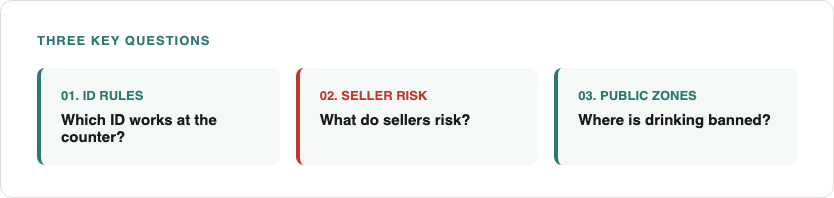
What English-language guides consistently skip is everything downstream of that number: which ID a cashier will actually accept, what a business risks for not checking, and — increasingly — where you’re allowed to drink at all. Those three questions are the actual axis of this guide, and each one turns out to have a specific Korean legal or municipal answer that most English coverage never opens.
ID Rules — What Actually Works
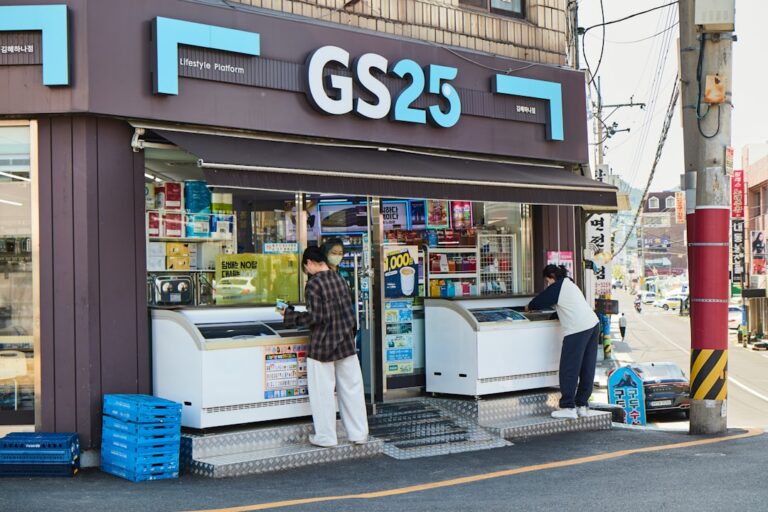
Convenience stores and bars in Korea check ID often, including for visitors who are obviously well past 19. That isn’t a judgment call by the cashier — it’s built into how the law assigns responsibility, covered in the next section. Here’s what to actually carry.
Passport and Foreigner Registration Card
A passport is the standard, reliable ID for a foreign visitor buying alcohol. For anyone holding a foreigner registration card (외국인등록증, ARC), Korea’s immigration law gives that card the same legal standing as a domestic resident registration card for identification purposes — it works at a register the same way a Korean ID card does.
Mobile Registration Card — What the Law Says
Korea also issues a mobile version of the foreigner registration card (모바일외국인등록증) through the government’s official mobile ID service (mobileid.go.kr), verified by IC chip or QR code. This isn’t just a service description — it has a specific legal basis. I opened the Immigration Act directly on law.go.kr in August 2026: Article 88-2, Clause 1 states that wherever a resident registration card is required by law for a procedure or transaction, a foreigner registration card — including the mobile version — substitutes for it, and Clause 3 (added June 13, 2023) specifically allows a mobile foreigner registration card to substitute wherever confirming the physical card is required. What that looks like in practice at an individual convenience store is a separate question — store-level acceptance of a newer ID format tends to lag its legal introduction, and this research did not find a store-level survey confirming how consistently staff accept it. Treat it as legally valid, and carry the physical card too if you have it.
What’s Not Officially Confirmed — Phone Photos and Foreign Driving Licences
Some independently published guides claim a phone photo of your passport, or a foreign driving licence, is either accepted or refused as ID for buying alcohol in Korea. Neither claim traces to an official source — this research found no government guidance either way. The safe assumption is the one that needs no guesswork: carry the physical passport.
| ID | Legal basis | Status (as of August 2026) |
|---|---|---|
| Passport | — | Standard, always reliable for foreign visitors |
| Foreigner registration card (ARC) | Immigration law — same standing as a resident registration card | Accepted |
| Mobile foreigner registration card | Immigration Act Art. 88-2(1),(3) — substitutes for the physical card by law | Valid by law; in-store consistency not independently confirmed |
| Domestic driver’s licence | — | Accepted (for residents) |
| Foreign driver’s licence | No official guidance found | Not confirmed — don’t rely on it |
| Phone photo of passport | No official guidance found | Not confirmed — don’t rely on it |
Why Staff Check So Carefully — Seller Obligations and Penalties
The reason ID checks in Korea feel thorough rather than casual is that the law puts the legal risk on the seller, not the buyer. A visitor who gets served while technically underage isn’t the one who ends up in front of a judge — a business that fails to check is.
The Law Behind the Question
Article 28 of the Youth Protection Act does two things: it bans selling, renting, or giving away “youth-harmful substances” — a category that explicitly includes alcohol under the Liquor Tax Act — to anyone under 19, and it requires the seller to confirm the buyer’s age and identity before selling. I opened the current text on law.go.kr in August 2026: in the version in effect from July 1, 2026, Article 28④ states that confirmation duty in general terms only — it does not delegate a specific checking method to presidential decree. An amendment passed April 7, 2026 does add that delegation, but it isn’t in effect yet: its listed effective date is April 8, 2027, and no enforcement-decree article implementing it exists yet. Until then, the duty to check exists and the method is left open.
What Happens If a Store Sells to a Minor
The penalties sit in Article 59 of the same Act. Selling, renting, distributing, or giving alcohol or tobacco to a minor carries up to 2 years in prison or a fine of up to ₩20 million (as of August 2026, current statute text). Buying alcohol on a minor’s behalf and handing it over carries the same range. This is a business-facing penalty — it attaches to the seller, not to an underage buyer, and it has nothing to do with a foreign visitor who gets asked for ID and simply shows it.
| Violation | Statute | Penalty |
|---|---|---|
| Selling, renting, or distributing alcohol or tobacco to a minor, or providing it free of charge for profit | Youth Protection Act Art. 59(6) | Up to 2 years imprisonment or ₩20 million fine |
| Buying alcohol for a minor and handing it over | Youth Protection Act Art. 59(7) | Up to 2 years imprisonment or ₩20 million fine |
| Pressuring or inducing a minor to buy, for commercial gain | Youth Protection Act Art. 59(7-2) | Up to 2 years imprisonment or ₩20 million fine |
| Failing to post a “no sale to minors” notice | Youth Protection Act Art. 59(7-3) | Up to 2 years imprisonment or ₩20 million fine |
| Selling a minor a hallucinogen or designated substance | Youth Protection Act Art. 58(3) | Up to 3 years imprisonment or ₩30 million fine |
The Sign You See at Every Register — and Why It’s There
Local tip — Article 59(7-3) of the Youth Protection Act puts failing to post a “no sale to minors” notice in the same penalty bracket as actually selling to one — up to 2 years or ₩20 million, per the current statute text (as of August 2026). English-language guides to Korea don’t mention this requirement at all. It’s a plausible reason nearly every convenience store carries that small sign near the register — not decoration, a compliance requirement carrying the same legal weight as the sale itself.
Why the Checking Method Isn’t Standardized
I checked the enforcement decree’s full text directly on law.go.kr in August 2026 and searched it for every article that references Article 28. Three came up — one covering an exception to the sale ban, one covering the wording required on the “no sale to minors” sign, one covering packaging — and none of them sets a method for confirming age at an alcohol sale. The decree’s Article 17 does spell out a detailed checking method — in-person ID checks, a faxed or mailed copy, digital-certificate or card verification — but for a different category entirely: 청소년유해매체물 (youth-harmful media products, whether sold in person or online), under a separate article of the parent law, not alcohol sales. So the inconsistency in how a cashier checks ID isn’t a case of the law asking for a method and the decree forgetting to supply it. Under the law as it stands now, there’s no delegated method to supply in the first place — the duty to check exists, and how a store does it is left to the store.
Local tip — Some English guides describe a specific procedure Korean convenience stores are supposedly required to follow when checking ID — a particular angle, a scan, a written log. That kind of detailed procedure does exist in Korea’s enforcement decree, but only for sales of youth-harmful media products, in person or online, under a different article of the same law. For an alcohol sale at a register, current law requires the check but doesn’t delegate a method to specify — a change due to take effect April 8, 2027 would add that delegation, though the decree article to implement it doesn’t exist yet.
Where You Can (and Can’t) Drink in Public
Korea’s reputation for relaxed public drinking is accurate but incomplete. The part that’s missing sits at the municipal level, and it doesn’t show up in a single national law you can point to.
The Legal Basis — a Local Option, Not a National Ban
I opened the National Health Promotion Act directly on law.go.kr in August 2026 to confirm this. Article 8-4, added in a December 2020 amendment, gives local governments the power — not the obligation — to designate no-drinking zones by ordinance “where deemed necessary” for public health. The same Act’s Article 34(3)(1) caps the fine for drinking in a designated zone at ₩100,000 nationwide. That’s the entire national framework: a permission slip for local governments and a fine ceiling. Everything about where a zone actually exists is decided district by district, not by Seoul or the central government.
Local tip — “Korea has banned street drinking” is the kind of line that circulates in English travel forums, and it’s wrong as a blanket statement. The law only lets a district government opt in by ordinance — a search of Korea’s national ordinance database for “no-drinking zone designation” (금주구역 지정) turns up about 135 separate local ordinances and rules, as of August 2026. But passing an ordinance doesn’t automatically ban drinking across the whole district either: an ordinance defines categories of place (parks, playgrounds, transit stops), and the actual no-drinking zones inside those categories still have to be individually published by public notice before signs go up. Even in a district with an ordinance, only the specifically noticed locations are actual no-drinking zones.
What Counts as a Violation
Local tip — Under Seoul’s Gwangjin-gu ordinance, drinking from an open container isn’t the only violation. Pouring alcohol into a different container and drinking or carrying it that way, open, counts too (Article 12, Clause 2) — a direct answer to the assumption that decanting a drink into a water bottle gets around a no-drinking zone. This provision draws on the same national framework other districts use, so similar wording is plausible elsewhere, though this research checked Gwangjin-gu’s ordinance specifically rather than the roughly 135 local ordinances and rules nationwide.
Case Study: Gwangjin-gu’s Rules
I read both Gwangjin-gu’s and Jungnang-gu’s ordinances directly on law.go.kr in August 2026, including their penalty clauses and supplementary provisions. Gwangjin-gu’s ordinance — the “Healthy Drinking Culture Environment Ordinance” (건전한 음주문화환경 조성 및 지원에 관한 조례) — predates 2022, with earlier amendments on record from 2019 and 2020. The no-drinking zone and fine system was added by a 2022 amendment (Ordinance No. 1297), which lists eight categories of possible no-drinking zones — city parks, daycare centers, kindergartens, school protection zones, children’s playgrounds, transit stops such as bus stands and taxi ranks, medical facilities, and “other locations residents request or the district head deems necessary.” Designation requires the district office to publish the purpose, location, and boundaries in the district gazette and online before signs go up — that publication step isn’t optional. The fine is ₩100,000.
The 2022 amendment that created Gwangjin-gu’s no-drinking zone system took effect on its promulgation date of October 17, 2022, but its fine clause (Article 12) didn’t start until January 1, 2023 — roughly a two-and-a-half-month gap the ordinance’s supplementary provisions spell out directly. Creating a no-drinking zone system doesn’t automatically mean fines start the same day; the zone rules and the penalty clause can have different effective dates.
Case Study: Jungnang-gu — a Different Fine, Not a Later Start
Seoul’s Jungnang-gu carries a similarly named ordinance, and its law.go.kr page header is easy to misread. The header shows an effective date of October 5, 2023 — but that’s the date of a later amendment that reworded a single line in the zone-designation article (about how city parks are described), not when the no-drinking system began. A zone-designation article (Article 3) was already on the books before 2022; what November 24, 2022 added was the enforcement half — the clause that actually prohibits drinking in a designated zone (Article 3, Clause 4) and the fine clause (Article 11), both marked as newly inserted on that date. That is five weeks after Gwangjin-gu’s founding amendment, and before Gwangjin-gu’s own fine clause activated on January 1, 2023. The two districts moved at roughly the same time, not a year apart. The October 2023 date in the page header comes from a district-wide amendment whose stated purpose was tidying up difficult legal wording.
Local tip — What actually differs between the two districts isn’t the timeline — it’s the fine. Jungnang-gu sets its penalty at ₩50,000 (Article 11, Clause 1), half of Gwangjin-gu’s ₩100,000, and both figures sit within the same national ₩100,000 cap. English-language coverage of Korea’s no-drinking zones, on the rare occasion it mentions a figure at all, tends to quote one flat number for the whole country. The actual amount is a district-level decision, and it varies — same violation, different fine, depending which Seoul district you’re standing in.
There’s No Single National Map — Here’s How to Check
The practical rule, given that structure: Han River parks and ordinary neighborhood parks are generally fine. A posted sign or notice marks an actual designated zone. There is no single national list to check instead of looking for the sign, because the list doesn’t exist at the national level — only at the level of whichever district you’re standing in.
| District | Ordinance | Zone/fine rules established | Fine | Note |
|---|---|---|---|---|
| Seoul, Gwangjin-gu | Healthy Drinking Culture Environment Ordinance (No. 1297) | Amendment promulgated Oct 17, 2022; fine clause (Art. 12) from Jan 1, 2023 | ₩100,000 | About a 2.5-month gap between the ordinance and its fine clause |
| Seoul, Jungnang-gu | Healthy Drinking Culture Environment Ordinance | Zone and fine articles (Art. 3, Art. 11) newly added Nov 24, 2022 | ₩50,000 | Established about five weeks after Gwangjin-gu, not a year later — the page’s Oct 2023 header date is a later, unrelated wording amendment |
| Nationwide framework | National Health Promotion Act Art. 8-4 / Art. 34(3)(1) | Art. 8-4 added Dec 29, 2020 | Up to ₩100,000 (national cap) | About 135 local ordinances and rules sit inside this framework, as of August 2026 |
Buying Alcohol — Where and When
Convenience Stores and Late-Night Sales
Korea has no national law restricting the hours alcohol can be sold off-premises — unlike, for example, jurisdictions that set a fixed overnight cutoff for retail alcohol sales — so convenience stores selling alcohol nearly around the clock is accurate as a general rule. Individual districts could in principle set their own local restrictions on top of that; none were identified for this article, but check locally if the exact hour matters to your plans.
Bars, Restaurants, and Street Tents
Restaurants and bars serve alcohol to anyone who clearly reads as an adult without incident. A pojangmacha — a street food tent — is a common informal setting for a late drink, and the wider drinking culture guide covers the etiquette that goes with it: soju and beer, often mixed as somaek, makgeolli, and the anju food that typically comes with them.
Delivery Apps — A Different Check Happens at the Door
Alcohol delivery through Korea’s major delivery apps reportedly involves the rider checking a physical ID and getting a signature in person at handoff, rather than a check at order time. This research found that detail in a single news report rather than an official policy page, so treat it as a plausible pattern rather than a confirmed rule — and expect to show ID at the door either way.
What You Need to Know
-
The drinking age is 19 by year age — the cutoff is 1 January of the year you turn 19. Full mechanics are in the age guide; this article covers what happens after that number.
-
A passport or foreigner registration card is the reliable ID. A mobile registration card is legally valid too, but store-level consistency in accepting it isn’t independently confirmed.
-
Sellers, not buyers, carry the legal risk. Selling alcohol to a minor carries up to 2 years imprisonment or a ₩20 million fine (as of August 2026).
-
Missing the “no sale to minors” sign carries the same penalty bracket as an actual sale — up to 2 years or ₩20 million.
-
No-drinking zones are a district-by-district opt-in, capped nationally at ₩100,000 — not a blanket ban on public drinking.
-
Decanting a drink into another container doesn’t get around a no-drinking zone, at least under Gwangjin-gu’s wording.
-
Convenience stores sell alcohol nearly 24/7 nationwide; no hour restriction was found at the national level.
Practical Tips
-
Carry your physical passport. It’s the ID that works without any ambiguity, at a register or anywhere else you’re asked.
-
Keep your ARC or mobile ARC on hand too if you have one, but don’t rely on a phone photo or a foreign driving licence — no official guidance confirms either is accepted.
-
Don’t take an ID check personally. Expect one even if you’re obviously well over 19 — the law puts the risk on the person selling, not on your appearance.
-
Look for a posted sign or notice before drinking in a park downtown or near a station. That’s the actual indicator of a designated zone, not a mental map of “Korea allows this everywhere.”
-
Decanting a drink into a water bottle is named as a violation in its own right, under Gwangjin-gu’s ordinance wording — not a workaround for a no-drinking zone.
-
If ordering alcohol through a delivery app, have your ID ready at the door — the check reportedly happens at handoff, not at order time.
-
Check your specific district’s ordinance if the exact boundary matters — Korea’s national ordinance database lists about 135 separate no-drinking zone ordinances and rules, and each district publishes its own list of actual zones by separate public notice.
Frequently Asked Questions
What is the legal drinking age in Korea?
19, counted by year age rather than international age. You become eligible on 1 January of the year you turn 19, regardless of whether your birthday has already passed — the full counting mechanics, including how this differs from the international age used for most other legal purposes, are covered in the age guide. What actually matters once you clear that line is covered in this article instead: which ID a seller will accept, what a business risks for skipping the check, and where public drinking is restricted by local ordinance.
What ID do I need to buy alcohol in Korea?
A passport is the reliable choice for foreign visitors, and it’s the ID that needs no guesswork. A foreigner registration card (ARC) also works, carrying the same legal standing as a domestic ID card under Korea’s immigration law, and its mobile version is legally valid too under a separate provision of that same law — though how consistently individual stores accept the mobile version hasn’t been independently confirmed. A phone photo of your passport or a foreign driving licence isn’t confirmed as accepted or refused by any official source either way, so carrying the physical document is the safer option.
Can I use a mobile ID (모바일 신분증) to buy alcohol?
Legally, yes. Under Immigration Act Article 88-2, a mobile foreigner registration card substitutes for the physical card wherever a resident registration card or ARC is required for identification, including at a point of sale — that’s a statutory basis, not just a service description on the government’s mobile ID site. How consistently individual convenience stores or bars accept the mobile version in day-to-day practice wasn’t independently confirmed for this article, since store-level acceptance of a newer ID format tends to lag its legal introduction. Carrying the physical card as a backup is the safer move.
I’m 18 internationally but turn 19 this year — can I buy alcohol?
Possibly, because Korea’s drinking age is set by year age rather than international age. If you turn 19 at any point during the current calendar year, you’re counted as eligible from 1 January of that year regardless of whether your birthday has actually happened yet — someone born in December can buy alcohol months before their international 19th birthday. You may still be asked for ID to confirm your birth year, since staff can’t tell your exact age at a glance. See the age guide for how the counting system itself works and where else it applies.
What happens if a Korean store sells alcohol to someone underage?
The seller, not the buyer, faces the legal risk. Selling, renting, or distributing alcohol to a minor carries up to 2 years imprisonment or a fine of up to ₩20 million under the Youth Protection Act (as of August 2026). The same penalty bracket applies if a store simply hasn’t posted the required “no sale to minors” notice near the register, even without an actual sale taking place — a plausible reason that small sign is so consistently displayed. None of this creates any legal exposure for a visitor who is asked for ID and shows it.
Is public drinking illegal in Korea?
Not generally. Public drinking remains broadly legal across most of the country, including in the majority of parks and along the Han River. What’s changed is that individual districts can now designate specific no-drinking zones by ordinance, with fines of up to ₩100,000 for drinking inside one. About 135 such local ordinances and rules exist nationwide (as of August 2026), and each one only covers the specific locations that district has formally designated and posted signs for — not a blanket, nationwide ban on public drinking.
Where are Korea’s no-drinking zones?
They’re set district by district rather than nationally, under a national framework that lets — but doesn’t require — local governments opt in by ordinance. Seoul’s Gwangjin-gu and Jungnang-gu are two documented examples, each with its own ordinance and its own fine amount: ₩100,000 in Gwangjin-gu and ₩50,000 in Jungnang-gu, both within the national ₩100,000 cap. Look for a posted sign or district notice before drinking somewhere that feels like it might be covered — there’s no single national map to check instead, because the list only exists at the district level.
Can I drink at Han River parks?
Generally yes. Han River parks and ordinary neighborhood parks are not typically among the locations districts designate as no-drinking zones, which tend to focus on children’s playgrounds, school protection areas, and transit hubs like bus stops instead. It’s still worth checking for a posted sign or notice at the specific spot you’re at, since designation is decided park by park and district by district rather than by one blanket national rule — and where a zone does exist, the fine and its enforcement are set locally, not nationally.
Related Questions
- How Korean Age Actually Works
- Drinking in Korea: A Practical Guide for Visitors
- Korean Hangover Cures: What Actually Works