Seoul Subway: Tap-Out Rules That Changed in 2026
Quick Answer
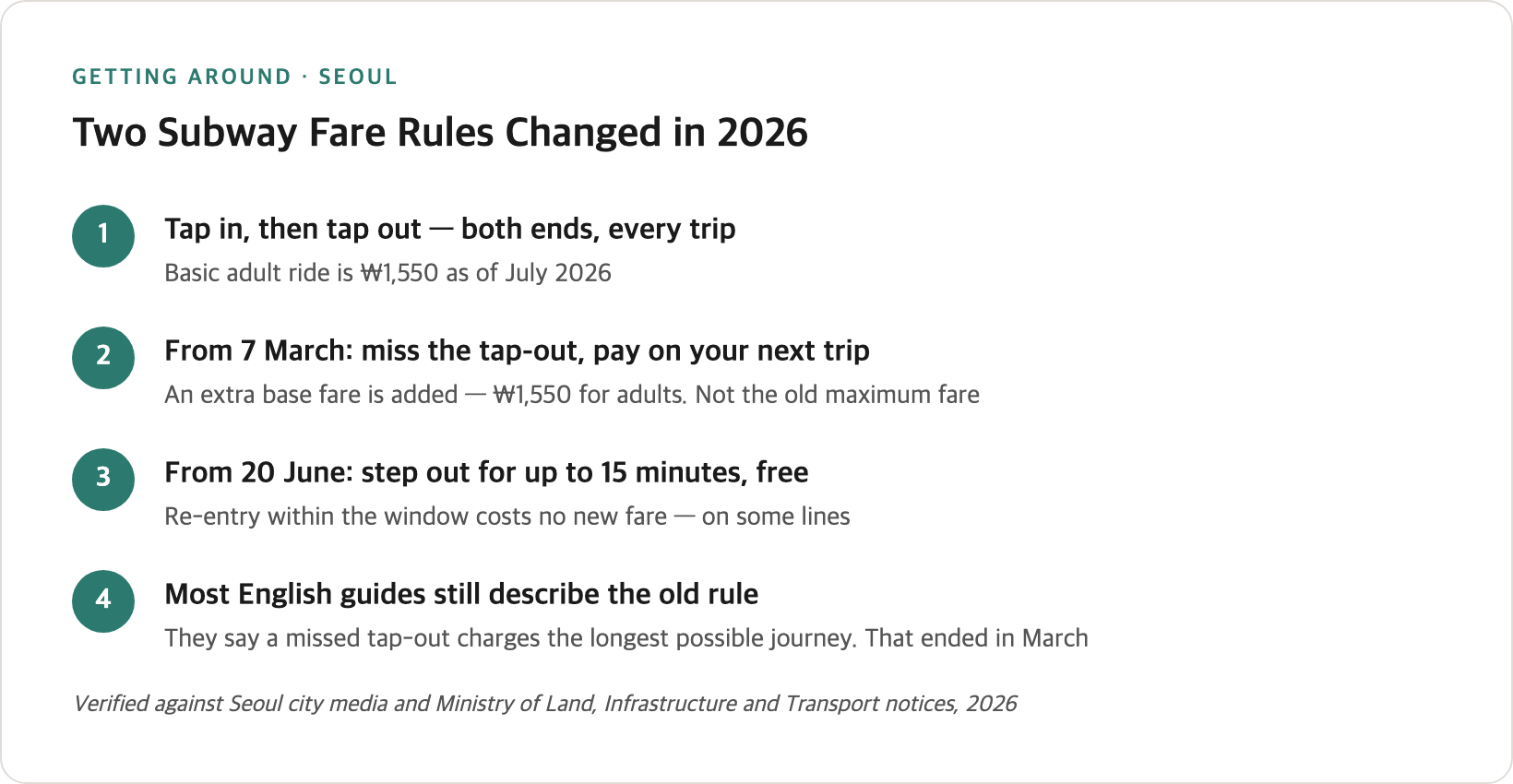
Seoul’s subway runs from roughly 05:00 to midnight and costs ₩1,550 for a basic adult ride (as of July 2026). Two fare rules changed this year: since March, forgetting to tap out adds a full base fare to your next trip, and since 20 June, stepping outside the gates for up to 15 minutes no longer costs you a new fare — on some lines. Most English guides still describe the older “maximum fare” rule.
The Full Answer
The Seoul subway is genuinely easy to use. Signs are bilingual, trains are frequent, and the fare is flat and cheap for most trips inside the city. Nothing in this guide changes that.
What changed in 2026 is the part nobody explains well: what happens when you get the tapping wrong.
Two separate rules landed this year. In March, the network started charging a penalty for missed exit taps. In June, the Ministry of Land, Infrastructure and Transport added an exemption for people who leave the gates briefly and come straight back. Both are documented in Korean news and in English-language Korean media — but neither has made it into the travel guides that come up when you search for how to ride the subway.
I checked the top English-language subway guides in July 2026, including Seoul’s own official tourism site. Every one of them explains tapping in and out correctly. None of them mentions the penalty, and none mentions the 15-minute rule. Several still say that forgetting to tap out means you pay the maximum fare — which was true until March.
That gap is the reason this guide exists.
The Basics, Briefly
If you have used a metro anywhere else, this part will feel familiar.
- Fare: ₩1,550 base for adults, distance-based increments beyond the base zone (as of July 2026)
- Hours: roughly 05:00 to midnight, varying by line and direction (useful for late museum or palace visits — the National Museum of Korea runs extended evening hours on some days)
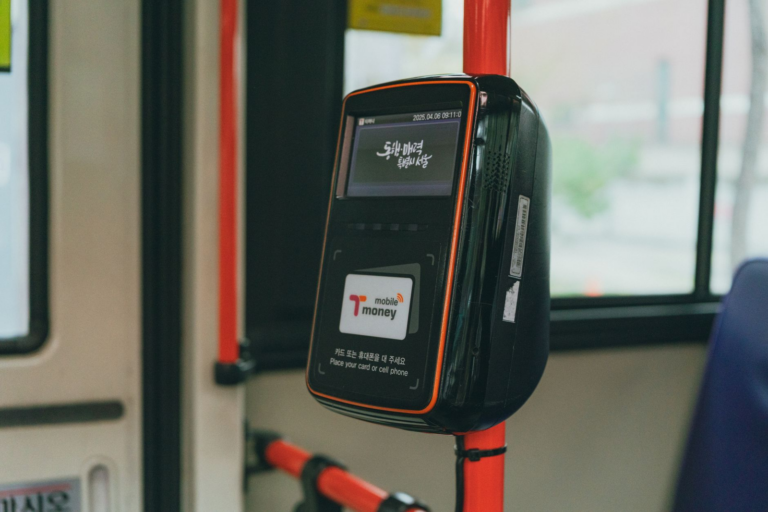
- Payment: a T-money card (₩2,500–4,000 for the card itself, non-refundable) is standard. Since 2026, around 440 machines across 220+ stations also accept international Visa and Mastercard — useful if you are still deciding whether to rely on cash or card in Korea
- Tap in, tap out: both ends, every trip. This is where the new rules bite
Two practical notes that every guide gets right, and they are right:
Pick your exit number before you climb the stairs. Seoul stations are large, and two exits can leave you on opposite sides of a wide road with no crossing for a block. If stairs are the obstacle rather than the walk — a wheelchair, a stroller, a heavy case — Seoul subway accessibility covers what the “one accessible route per station” programme completed in December 2025 actually guarantees, and the platform gap that Seoul Metro’s own Korean pages flag at 152 stations.
Do not use Google Maps for transit here. It lacks live integration with Seoul Metro data — there are specific reasons Google Maps is limited in Korea. Naver Map and KakaoMap both work properly and both have English interfaces.
What Changed in March 2026: The Tap-Out Penalty
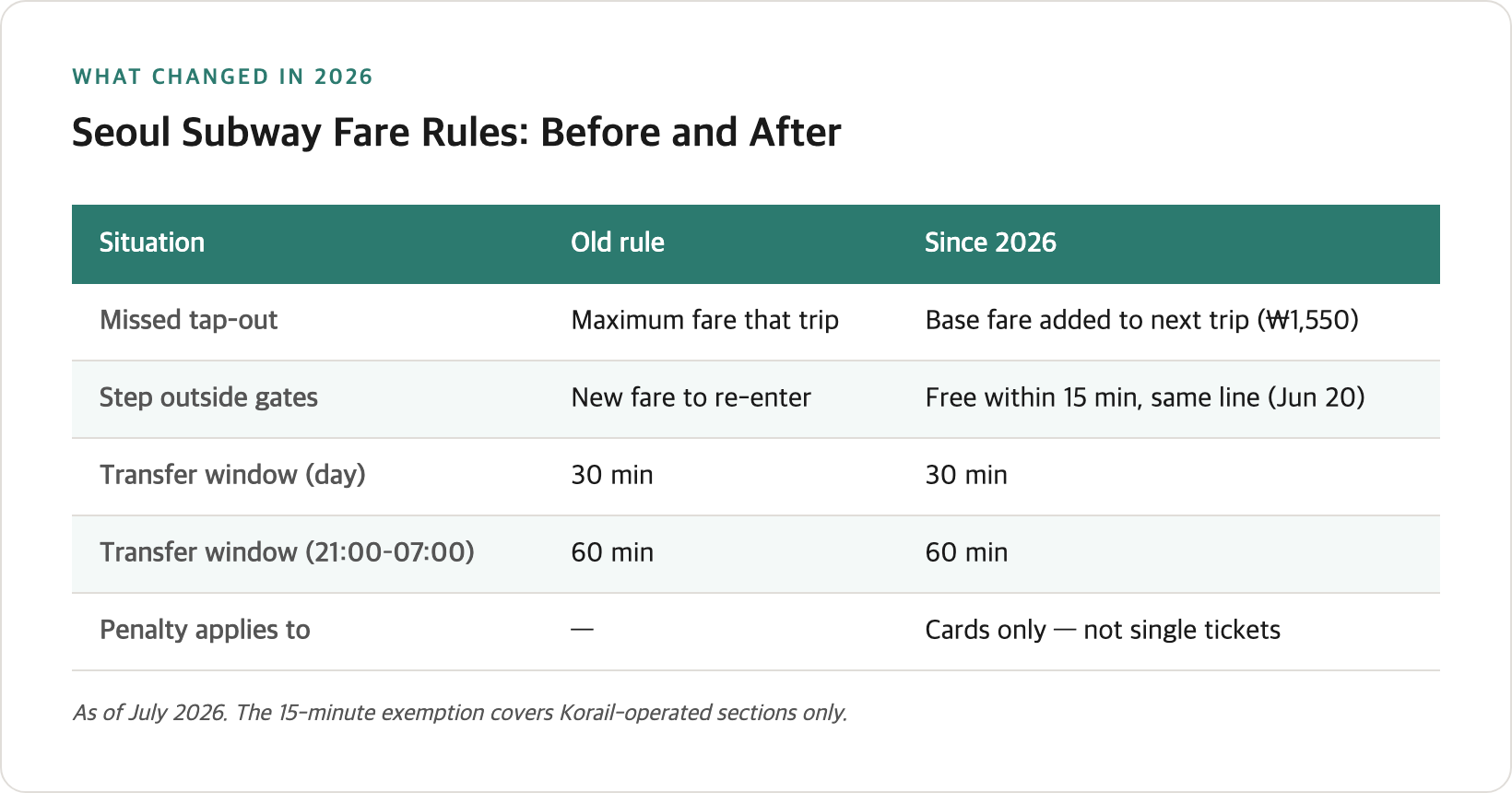
Until this year, failing to tap out was handled the way most systems handle it — the system assumed the longest possible journey and charged you the maximum fare for that trip.
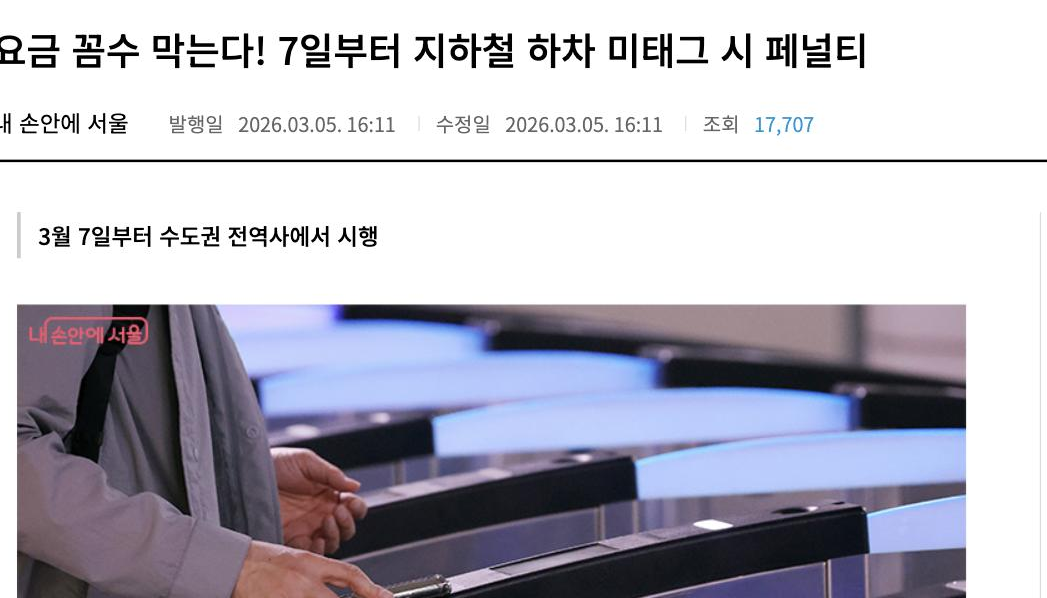
Since March 2026, it works differently. The system charges you an extra base fare on your next trip instead.
| Age group | Penalty added to next trip |
|---|---|
| Adults (19+) | ₩1,550 |
| Adolescents (13–18) | ₩900 |
| Children (6–12) | ₩550 |
The surcharge equals the base fare and applies across the whole metropolitan network, including sections operated by Korail rather than Seoul Metro.
Local tip — Most English guides still tell you a missed tap-out means the maximum fare for that ride. That was accurate until March 2026. The penalty now lands on your next journey, which means you may not notice it happened until you are already through the gate somewhere else.
There is one exemption that no English travel guide mentions, and it matters for short-term visitors:
Local tip — The penalty applies to prepaid and postpaid transit cards only. Single-journey tickets, season passes, and discounted passes are excluded. If you are buying single-ride tickets rather than using a T-money card, this rule does not apply to you at all.
Sources give slightly different start dates — English reporting says 1 March, some Korean write-ups say 7 March. Either way it has been in force since early March 2026. I have not been able to reconcile the two dates from primary sources, so treat “since March 2026” as the safe reading.
What Changed in June 2026: The 15-Minute Re-Entry Rule
This one works in your favour.
Before June, leaving the paid area — to find a toilet, to check a sign, because you walked through the wrong gate — meant paying a fresh base fare to get back in. Since 20 June 2026, you can step out and return without paying again.
I checked the ministry’s announcement and the Korail line list in July 2026 — the conditions are narrower than they first appear:
- Same station
- Same line
- Within 15 minutes
- Once per journey — the exemption does not repeat
- Transit card only. Single-ride tickets and commuter passes are not eligible
Local tip — The 15-minute exemption currently applies to Korail-operated sections: Line 1 (Yeoncheon–Hoegi, Namyeong–Sinchang, Guro–Incheon), Line 3 (Daehwa–Jichuk), Line 4 (Namtaeryeong–Oido), and the Suin-Bundang, Gyeongui-Jungang, Gyeonggang and Seohae lines. Privately operated lines and sections run by Incheon Transit Corporation are excluded.
That last exclusion is worth flagging if you are heading to or from Incheon Airport. Parts of that corridor fall outside the exemption, so stepping out of the gates there can still cost you a new fare.
Transfers: 30 Minutes, or 60 at Night
Transfers between subway and bus are free within a time window, as long as you tap out and tap in properly.
| When | Window |
|---|---|
| Daytime | 30 minutes |
| 21:00–07:00 | 60 minutes |
Local tip — The late-night window is double the daytime one, and the boundary is 21:00 — not “after the last train” or “late evening” as it is sometimes described. If you are chaining a subway ride to a bus after 21:00, you have a full hour.
Transfers only work if you tap out at the gate. Walking out through the turnstiles mid-transfer starts a new fare, so when you are changing lines inside a station, follow the coloured line signs and stay inside the paid area.
What You Need to Know
-
The penalty is delayed, not immediate. You will not be stopped at the gate. The extra fare appears on your next tap-in, which makes it easy to miss.
-
Single-ride tickets sidestep the penalty entirely. For a short trip where you are not using a transit card, the March rule does not apply.
-
The 15-minute exemption is not network-wide. It covers Korail-operated sections. If your station is on a privately operated line or run by Incheon Transit Corporation, stepping outside still costs a fresh fare.
-
The exemption is once per journey. Leaving twice means paying the second time.
-
Fares and rules changed twice in one year. Both changes happened in 2026. Check current figures before you travel rather than trusting a guide written earlier — including this one.
Practical Tips
-
Tap out every single time, even when the gate is open. Open gates at quiet stations still register taps, and a missed tap now follows you to your next trip.
-
If you realise you left the gates by mistake, go straight back in. Same station, same line, under 15 minutes, and on an eligible section you will not be charged again.
-
Chain your transfers after 21:00 if you can. The window doubles to an hour, which is enough to walk between a subway exit and a bus stop without rushing.
-
Use Naver Map or KakaoMap, not Google Maps. Google lacks live Seoul Metro data. Both Korean apps have English modes.
-
Check the exit number before you leave the platform. Choosing the wrong one at a large interchange can add ten minutes on foot.
-
Keep at least ₩5,000 on your card. A missed tap-out penalty comes out of your next fare, and a declined tap at a busy gate is a bad place to discover a low balance.
-
If you are here for two or three days, compare single-ride tickets against a T-money card. The card costs ₩2,500–4,000 up front and that fee is not refundable — and getting the balance refunded on the way out has its own rules.
Frequently Asked Questions
How much does the Seoul subway cost?
The base fare is ₩1,550 for adults as of July 2026, with distance-based increases for longer journeys. Adolescents and children pay reduced fares of ₩900 and ₩550 respectively.
What time does the Seoul subway stop running?
Most lines run until around midnight, with the last train timing varying by line and direction. First trains start around 05:00. Check the specific station on Naver Map or KakaoMap — end-of-service times differ meaningfully between lines.
How do you pay for the Seoul subway?
A T-money card is the standard method and works on subways, buses and in convenience stores. Since 2026, roughly 440 machines at more than 220 stations also accept international Visa and Mastercard directly.
What happens if I forget to tap out?
Since March 2026, an extra base fare is added to your next trip — ₩1,550 for adults. This replaced the older system, which charged the maximum fare for the trip where the tap was missed. Single-journey tickets and season passes are exempt.
Can I leave the station and come back without paying again?
Since 20 June 2026, yes — if you return through the same line’s gate at the same station within 15 minutes, once per journey, using a transit card. The exemption covers Korail-operated sections but not privately operated lines or Incheon Transit Corporation sections.
Should I use Kakao Metro or Naver Map?
Either works. Naver Map is the stronger all-round choice for foreign visitors thanks to broader English support, while KakaoMap gives more granular real-time detail such as which car to board for the fastest transfer.
Related Questions
- T-money Card: Buying, Topping Up, and Getting Your Refund
- Incheon Airport to Seoul: Every Option Including the Night Bus
- Why Google Maps Doesn’t Work in Korea — and What to Use
- Getting Around Korea: The Transport Guide That Connects the Details
- Do You Need a Visa for Korea? The 90-Day Rule Most Guides Get Half Right