Makgeolli: Which Bottles You Can Shake and Which You Can’t
Quick Answer
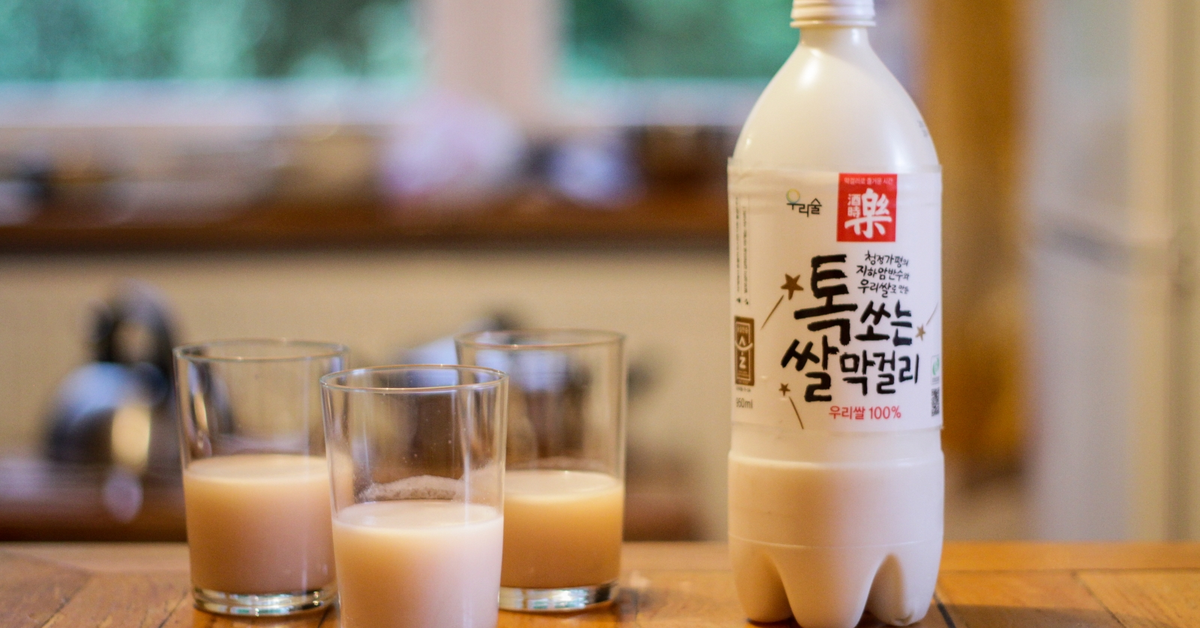
Makgeolli is Korea’s milky, lightly fizzy rice brew, usually 4–8% but ranging up to higher. Every guide tells you to shake the bottle to mix the settled sediment — but they leave out that there are two kinds. Raw (unpasteurised) makgeolli is still fermenting, has a vented cap that is not fully sealed, and can leak or spray if shaken hard or knocked. Pasteurised makgeolli is sealed, stores for months, and is the safe one to shake freely.
The Full Answer
Makgeolli is having a moment — craft versions, tasting bars, regional bottles — and the beginner guidance has largely caught up on flavour and etiquette. What it consistently skips is the single most practical thing: the two types behave completely differently, and treating one like the other makes a mess.
The advice “shake before drinking” is everywhere. It is correct for one kind and a minor hazard for the other. I checked Korean product information and brewing explainers in July 2026, because this raw-versus-pasteurised split is exactly the kind of everyday knowledge Korean drinkers take for granted and English guides omit.
The Two Types
| Raw / unpasteurised (생막걸리) | Pasteurised (살균막걸리) | |
|---|---|---|
| Live yeast | Yes, still fermenting | No, heat-stopped |
| Cap | Vented — not fully sealed | Fully sealed |
| Shelf life | Short, days to weeks | 6–12 months |
| Storage | Refrigerated only | Ambient until opened |
| Taste | Livelier, changes over time | Stable |
| Where sold | Local, near where brewed | Nationwide |
Local tip — Raw makgeolli is not fully sealed. The living yeast keeps producing gas, so the cap has tiny air holes — it looks sealed but isn’t. Shake it hard, drop it in a bag, or lay it on its side, and it can leak or spray. English guides say “shake to mix” without warning that on a raw bottle you should swirl gently, not shake, and keep it upright and cold.
Local tip — Pasteurised makgeolli is the one you can shake freely and store at room temperature until opened. If you want to take a bottle home or carry it around all day, buy pasteurised — it survives the trip. Raw makgeolli is the better drink but a poor traveller, and knowing which you’re holding saves both a spill and a disappointment.
How to Tell Them Apart
- Refrigerated aisle, short date → almost always raw
- Ambient shelf, long date → pasteurised
- 생 (saeng) on the label = raw; 살균 (salgyun) = pasteurised
- Cloudy sediment that resettles → both do this, so it is not a distinguisher on its own
Local tip — If it is in the fridge and the expiry is days away, treat it as raw: keep it cold, upright, and swirl rather than shake. That single habit covers you even if you can’t read the label.
Drinking It
- Swirl (raw) or shake (pasteurised) to mix the sediment back in
- Serve in a bowl or wide cup, not a narrow glass — traditional and practical for the texture
- Pair with savoury food — jeon (savoury pancakes) is the classic match, especially on rainy days
- Strength is usually 4–8%, deceptively easy to drink; premium and aged bottles go higher — lighter than soju’s 15.7% but it adds up
Local tip — The rainy-day pairing is not just folklore — jeon and makgeolli genuinely is the default order when it rains, to the point that pancake restaurants get busy in bad weather. If you want the local experience, a rainy afternoon is the time to seek it out.
Regional and Craft Makgeolli
Beyond the mass-market bottles, there is a deep world of regional and craft makgeolli — different rice, different water, different ferment. Jeonju and other regions have makgeolli alleys where a single order comes with a spread of side dishes.
Local tip — In a traditional makgeolli alley (막걸리 골목), ordering a kettle of makgeolli often brings a generous spread of anju with it, sometimes included in the price. It is one of the better-value drinking experiences in Korea, and it rewards going with a group.
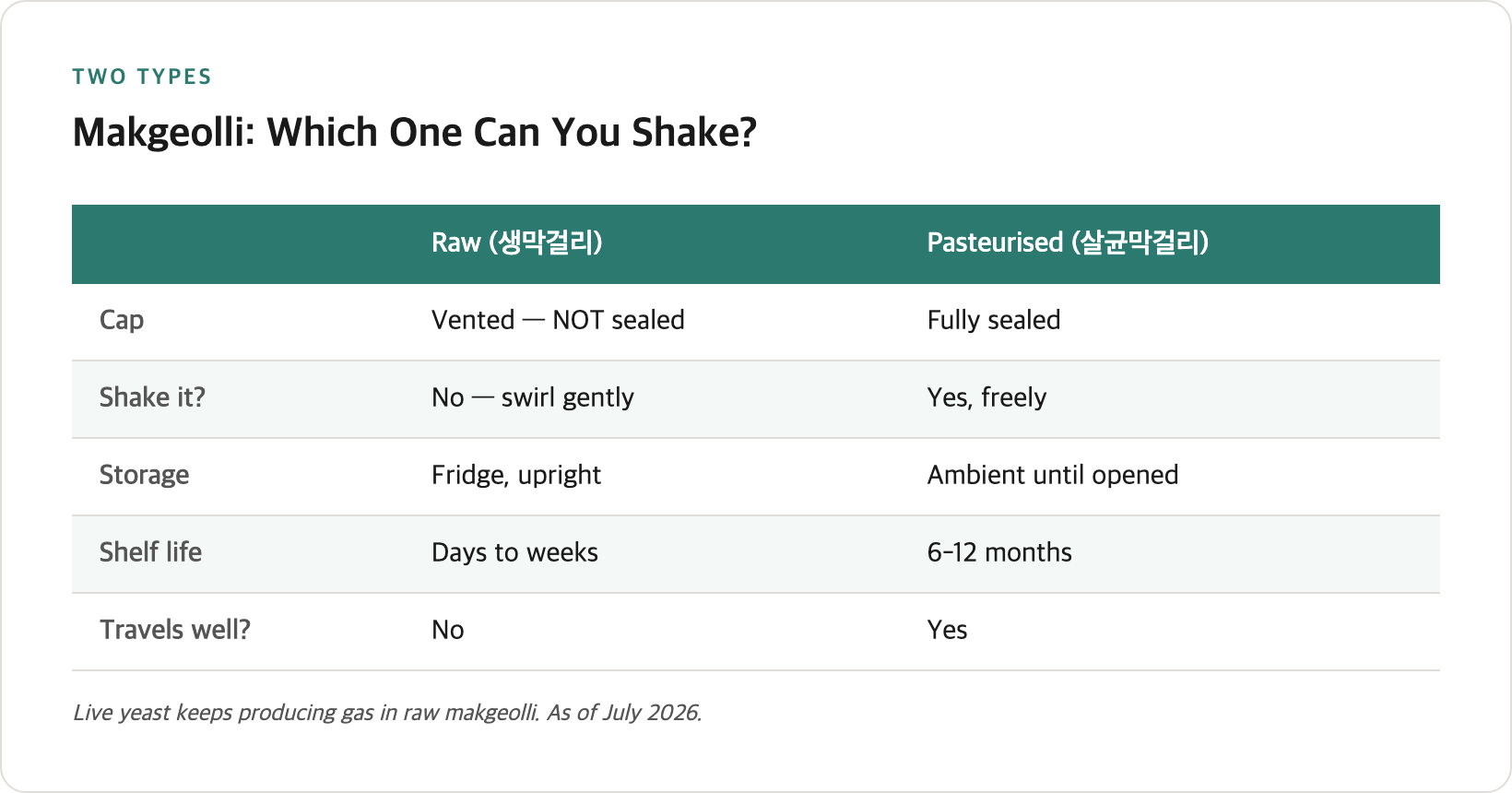
Photo by ~Cytryna~ on Wikimedia Commons · CC BY 2.0
What You Need to Know
-
There are two types, and they behave differently.
-
Raw makgeolli has a vented cap — swirl gently, keep upright and cold, don’t shake hard.
-
Pasteurised makgeolli is sealed — shake freely, stores for months, travels well.
-
Check for 생 (raw) or 살균 (pasteurised) on the label, or use the fridge-and-date rule.
-
It’s usually 4–8% but easy to drink, so pace yourself.
-
Jeon is the classic pairing, especially on a rainy day.
Practical Tips
-
Fridge + short date = raw. Keep it cold and upright, swirl don’t shake.
-
Ambient + long date = pasteurised. Safe to shake and store.
-
Buy pasteurised if you’re carrying it around or taking it home.
-
Serve in a bowl or wide cup, not a narrow glass.
-
Order jeon with it as your anju, and go on a rainy day for the full effect.
-
Seek out a makgeolli alley for the anju spread that comes with it.
-
Pace yourself — 4–8% goes down easily and adds up. Know the drinking-age rule if you’re near 19.
Frequently Asked Questions
Should I shake makgeolli before drinking?
It depends on the type. Pasteurised makgeolli can be shaken freely. Raw makgeolli has a vented cap and should be swirled gently, kept upright and cold, or it can leak.
What’s the difference between raw and pasteurised makgeolli?
Raw (생막걸리) still has live yeast, a vented cap, and a short refrigerated shelf life. Pasteurised (살균막걸리) is heat-treated, sealed, and stores for 6–12 months at room temperature.
How strong is makgeolli?
Usually 4–8%, though premium and aged versions can be higher. It is easy to drink, which makes it easy to underestimate.
Can I take makgeolli home as a souvenir?
Buy pasteurised for travel — it is sealed and stores for months. Raw makgeolli spoils quickly and can leak.
What do I eat with makgeolli?
Savoury food, classically jeon (Korean pancakes). The rainy-day pancake-and-makgeolli pairing is a genuine local habit.
What’s a makgeolli alley?
A cluster of traditional bars where a kettle of makgeolli comes with a spread of side dishes, often good value and best enjoyed in a group.
How does makgeolli fit into Korean drinking culture?
It’s one of the core drinks alongside soju and beer — see the drinking in Korea overview for how they connect.
Related Questions
- Soju in 2026: It’s Weaker Than Your Guidebook Says
- Korean Beer: Local Brands, Strengths, and the 4-for-₩10,000 Deal
- Drinking in Korea: A Practical Guide to the Culture
- Pojangmacha: How to Read a Korean Street-Food Tent (and Not Get Ripped Off)
- Korean Hangover Cures: What Actually Works (and What’s Just a Drink)