Where to Stay in Busan: Access, and the Licence Check Nobody Mentions
Quick Answer
Pick your Busan base by what you need to reach, not by the view. Seomyeon sits where Lines 1 and 2 cross. Busan Station is the only base with a covered walkway to the international ferry terminal. Haeundae is furthest from both the airport and the ferries. Nampo-dong is on Line 1, despite what some guides claim. Then check the property is a licensed lodging business.
Why the usual advice stops one layer short
Search “where to stay in Busan” in English and you get ten neighbourhood comparisons. I looked at that results page in August 2026: every result in the top ten was an independent travel blog, and almost all of them ran the same structure — Haeundae for the beach, Seomyeon for nightlife, Nampo-dong for the old town, plus a shortlist of hotels.
That layer is thoroughly covered, and there is no point adding an eleventh version of it. So this guide does two things those pages mostly don’t.
First, it compares the neighbourhoods by what they physically connect to — the airport, the KTX terminus, the international ferry pier — because in a city shaped like Busan that is what actually costs you time.
Second, it deals with the question of what you are legally booking. Korea has several distinct licence categories for accommodation, they carry different rules, and a meaningful share of what appears on booking platforms in Busan is operating without the registration it needs. That part is documented almost entirely in Korean, and it is the part I could add something to.
One correction before anything else, because it is circulating widely.
Local tip — Nampo-dong is on the subway. Some English guides describe Nampo-dong as central but unreachable by metro, and advise against basing there for that reason. That is wrong. Busan Metro Line 1 runs directly underneath it, with three consecutive stations serving the district: Jagalchi (110), Nampo (111), and Jungang (112), with Busan Station (113) next along the same line. The area that genuinely is not on the subway is Gamcheon Culture Village, which is a different place several kilometres west — that is covered in our Busan attractions guide. Do not rule out Nampo-dong on transit grounds.
The four bases, compared by what they reach
Busan is long and narrow, wrapped around hills and a harbour. The practical consequence is that no single base is close to everything, and the honest way to choose is to look at which fixed points matter for your particular trip.
| Base | Subway | Airport (Gimhae) | KTX / Busan Station | International ferry terminal | Beach |
|---|---|---|---|---|---|
| Seomyeon | Lines 1 & 2 interchange | Light rail + one transfer | ~10 min on Line 1 | Via Busan Station | Not walkable |
| Busan Station | Line 1 | Light rail + one transfer | On top of it | 10–15 min covered walkway | Not walkable |
| Nampo-dong | Line 1 (Jagalchi / Nampo / Jungang) | Light rail + transfers | 2–3 stops on Line 1 | Short taxi or 2 stops + walk | Not walkable |
| Haeundae | Line 2 | Longest transfer chain, or bus 7100 | Cross-city on Line 2 | Cross-city, then walk | Walkable |
| Gwangalli | Line 2 (Gwangan) | Long transfer chain | Cross-city | Cross-city | Walkable |
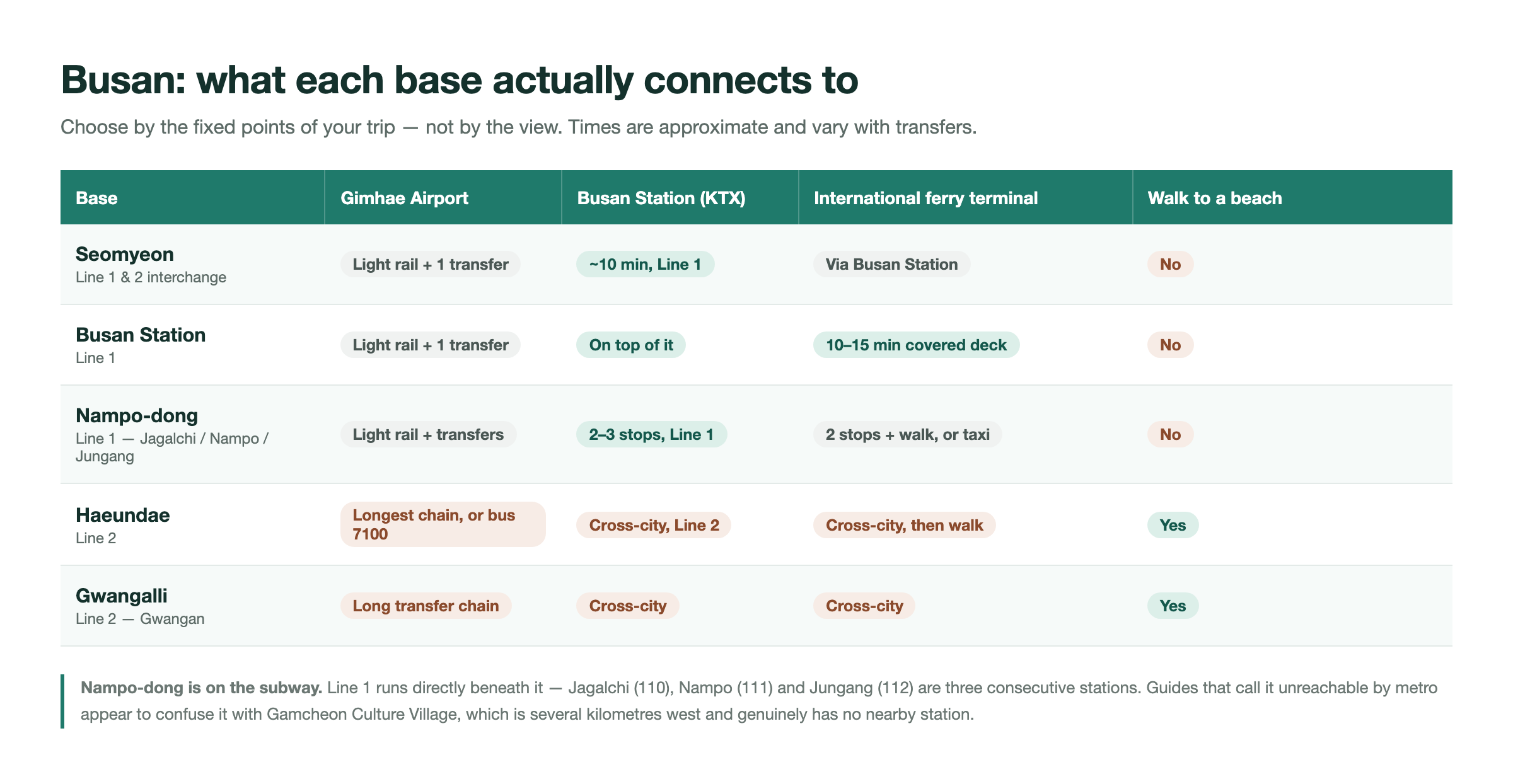
Read that table by row and the trade-off becomes obvious. Haeundae and Gwangalli buy you a beach at the cost of being at the far end of every other connection. Busan Station and Seomyeon buy you connections at the cost of no beach. Nampo-dong sits in between: well connected on Line 1, and the closest base to the old-town markets.
If you are taking the ferry to Japan
This is the single strongest reason to override every other consideration. The Busan Port International Passenger Terminal — the one the Fukuoka services use — is linked to Busan Station by an elevated covered pedestrian deck, roughly a 10 to 15 minute walk from Exit 10 with moving walkways along part of the route. Choryang Station, one stop further, is about 1.1 km and closer to 20 minutes on foot.
If you have an early departure and a check-in deadline to hit, staying anywhere else in Busan means either an early subway ride across the city or a taxi in the dark. Basing at Busan Station for the night before removes that problem entirely. The departure mechanics, including how early check-in closes, are in our Busan–Fukuoka ferry guide.
If you are arriving or leaving by KTX
Same logic, less dramatic. Busan Station is the KTX terminus, so a base within a couple of Line 1 stops — Busan Station itself, Nampo-dong, or Seomyeon — saves you dragging luggage across the city on the day you leave. Fare classes and refund windows are covered in our KTX booking guide.
If you are flying into Gimhae
Gimhae is on the western edge of the city, which flips the ranking. The reliable route is the Busan–Gimhae Light Rail from the airport to Sasang, then Line 2, then transfer again if you need Line 1. Reaching Busan Station this way takes roughly an hour to an hour and ten minutes end to end.
Airport limousine buses also run — reportedly two restructured routes since a change of operator in mid-2025, 7100 towards Haeundae and 7101 towards Seomyeon — but the last departures are in the region of 21:30, so a late arrival lands you on the light rail or in a taxi regardless. Check the current timetable rather than trusting any blog, including this one, on bus times.
What you are actually booking: Korea’s lodging categories
Here is the part the English guides skip, and it matters more in Busan than in most Korean cities because so much of the beachfront inventory sits in an unusual legal category.
Korean accommodation is not a single regulated thing. It splits across at least three different statutes, and the category determines who may legally stay, what safety rules apply, and — crucially — whether the operator needed permission at all.
| What you see advertised | Likely legal category | Governing law |
|---|---|---|
| Hotel, motel, inn | 숙박업 (lodging business) | 공중위생관리법 (Public Health Control Act) |
| Tourist hotel, hostel, small hotel | 관광숙박업 | 관광진흥법 (Tourism Promotion Act) |
| Guesthouse / homestay in a city | 외국인관광 도시민박업 | 관광진흥법 |
| Countryside pension, farm stay | 농어촌민박 | 농어촌정비법 |
| Hanok stay | 한옥체험업 | 관광진흥법 |
| “Residence”, serviced apartment | 생활숙박시설 | 건축법 + 공중위생관리법 |
Operating a lodging business without filing the required registration is not a technicality in Korea. Under the Public Health Control Act, running an unregistered 숙박업 carries criminal penalties — reported as up to two years’ imprisonment or a fine of up to ₩20 million under a provision added in December 2021. I was not able to open the current statute text directly to confirm the exact figures against the live 조문, so treat the numbers as indicative; the fact that it is a criminal rather than administrative matter is well established.
The reason a traveller should care is not legal exposure — the offence belongs to the operator, not the guest. It is that unregistered properties have not been through fire-safety, hygiene or facility inspection, and if something goes wrong there is no registered business behind the booking.
Local tip — you can check the licence yourself, before you book. English advice on this problem tends to be “ask the host to send a photo of their business registration certificate,” which relies on the honesty of the person you are checking. There is a better option that English guides essentially never name: the Korea Tourism Organization runs a public licensing lookup at
safestay.visitkorea.or.kr. Its front page invites you to “check legally registered accommodation nationwide” (전국에 등록된 합법숙소를 확인해 보세요), and it lets you search registered guesthouse-type lodging by region or by business name, with a map view and licensing detail. It draws on the Ministry of the Interior and Safety’s local permit database (localdata.go.kr), which publishes business name, address, licence date and current operating status. I opened the SafeStay site in August 2026 and the lookup was live. It is Korean-only, with no English interface — which is presumably why it has stayed invisible to English-language guides. Machine-translate the page; the search boxes are region and business name, and that is all you need.
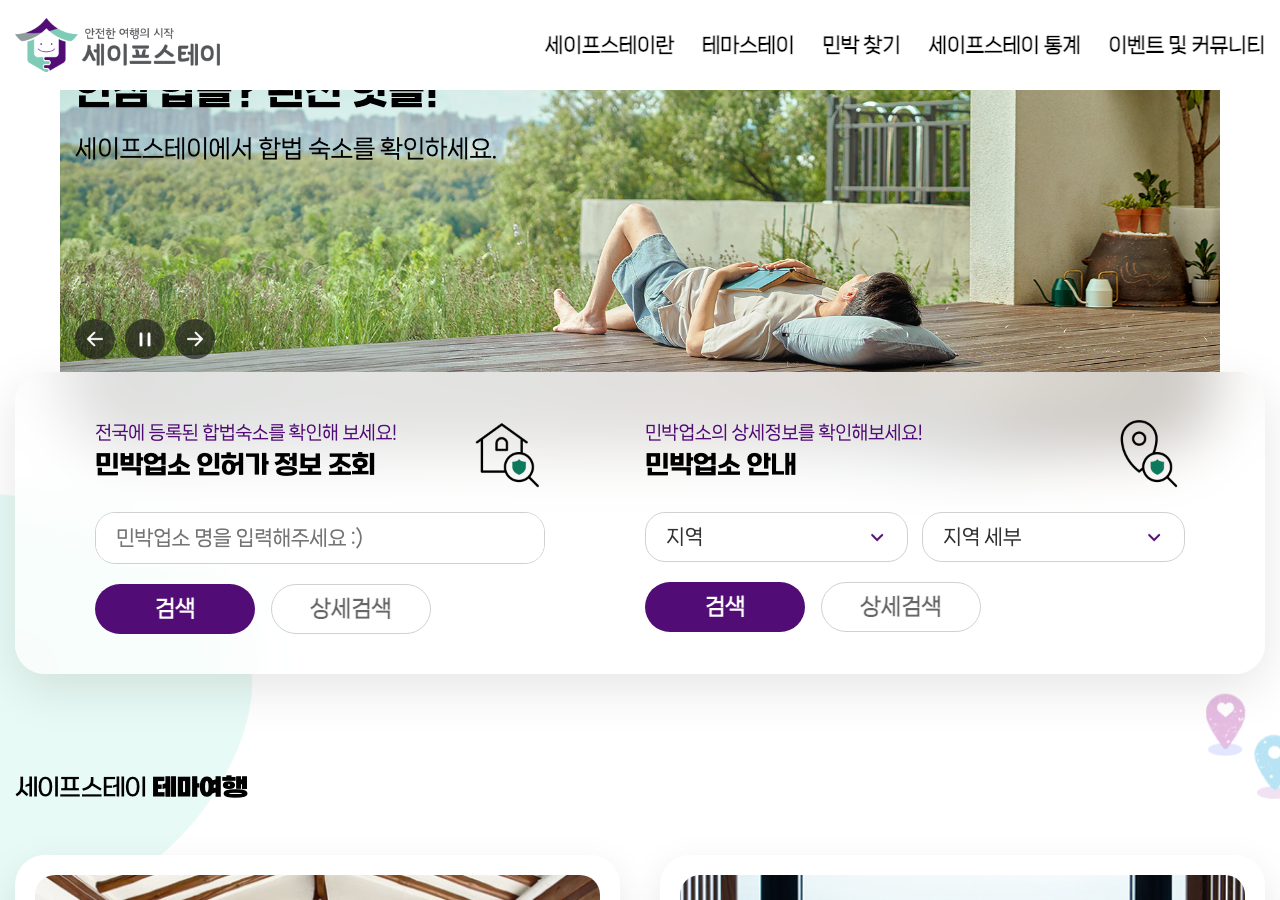
A caveat, so you use it correctly: SafeStay’s scope is the guesthouse and minbak family — foreign-tourist urban homestays, hanok stays, rural minbak, tourist pensions, hostels. That is deliberate, because those are the categories where unregistered operation is common. It is not the tool for verifying a large chain hotel, which you can generally take at face value.
The “residence” question, which is specific to Busan’s beachfront
If you have browsed Haeundae or Gwangalli accommodation on an international booking site, you will have seen units described as a “residence” or “hotel & residence” — apartment-style, with a kitchenette, often in a tall tower with a sea view.
In English that word does no work at all. It reads as a marketing label for “apartment-style hotel.” In Korean it is a specific building classification: 생활숙박시설, usually shortened to 생숙. These were built and sold as lodging facilities under the Building Act, then widely marketed to buyers in 2020–2021 as if they were homes.
That contradiction became a national regulatory problem. Because the building is legally lodging and not housing, an owner who simply lives in the unit is making an unauthorised change of use, which exposes them to enforcement fines calculated as a percentage of the building’s assessed value each year. The government’s response has been a series of deadlines and deferrals: owners who filed either a lodging-business registration or a use-conversion application by September 2025 had enforcement fines deferred through the end of 2027. And from January 2026, an owner of even a single unit can register as a lodging operator directly, rather than having to hand the unit to a management company.
For a traveller, the consequence is concrete: each individual unit in one of these towers may or may not be covered by a lodging-business registration, even though every unit in the building looks identical on a booking site. The building being famous, new and beachfront tells you nothing about the registration status of the specific unit you are booking.
Local tip — “residence” is a legal category, not a room type. English booking sites use the word purely descriptively; no English-language travel source I could find explains that a Korean 생활숙박시설 is a lodging-classified building whose individual units each need their own 숙박업 registration to be rented nightly. Busan holds a large share of the national stock. In the most recent published tally I could locate, roughly 3,300 of about 11,500 completed 생숙 units in Busan had neither registered as a lodging business nor converted use — a figure reported in the 2024–2025 coverage of the deferral deadline, and one I would treat as a scale indicator rather than a current count. If you are booking a “residence” unit rather than a staffed hotel, that is the moment to ask the operator directly whether the unit itself is registered.
Where Busan’s unregistered inventory actually concentrates
This is not a hypothetical risk, and the Korean record is specific about where it clusters.
Busan’s district authorities run seasonal inspections aimed squarely at the summer coast — enforcement sweeps reported around Haeundae, Songjeong and Dadaepo, the beaches and tourist zones where short-term demand spikes. That is the same stretch of city where most visitors book.
The pattern that shows up repeatedly in enforcement is not a fake hotel. It is an ordinary officetel or apartment unit listed on a sharing platform by someone who never registered it as a lodging business. One Busan Eastern District Court case concerned exactly this: units in a Haeundae-gu officetel let through a shared-accommodation booking site from June 2022 until April 2024, across 377 separate bookings totalling roughly ₩344 million in lodging fees, with no registration. The court fined the operator and noted a history of repeat offending.
Read that number the right way. Three hundred and seventy-seven bookings means several hundred travellers stayed there, and the overwhelming likelihood is that essentially none of them knew. The listing looked normal. It took a prosecution to surface it.
Local tip — the risk lives in apartment-style listings, not in hotels. Korean enforcement records point consistently at one shape of listing: a self-check-in unit inside a residential officetel or apartment building, marketed on an international platform, in a beach district. The tells are structural rather than obvious — no staffed reception, a lockbox or keypad entry, an address that resolves to a residential tower, and a host managing several near-identical units. None of those is proof of anything on its own, and plenty of perfectly legal operators use keypads. But it is the profile worth spending two minutes checking against the registration lookup, and English guides do not describe the profile at all.
Guesthouses and the foreigner-only licence
One more category quirk, because it produces a genuinely counter-intuitive situation.
The licence most city guesthouses hold is 외국인관광 도시민박업 — literally “urban homestay business for foreign tourists.” Under the Tourism Promotion Act it comes with conditions that English sources cover unevenly. The floor-area cap of under 230 square metres is widely repeated in English. Two other conditions are not.
Local tip — the guesthouse licence is foreigner-only, and the host is supposed to live there. Under this category the permitted guests are foreign tourists; Korean nationals are not the intended users, subject to ongoing proposals to relax that. And the host is required to actually reside in the dwelling being let — it is a homestay licence, not a licence to run an empty apartment as a hotel. English coverage reliably mentions the 230 m² limit and almost never mentions either of the other two. The practical inversion is worth knowing: as a foreign visitor you are the guest category this licence exists for, so a properly licensed urban guesthouse is a legitimate booking. But a whole-apartment listing with no host present is not what the licence permits, whatever the listing says.
Practicalities that vary by base
Last trains are earlier than you may expect
Busan’s metro shuts down earlier than Seoul’s, and if your evening plans are in one district and your bed is in another, that gap matters. On Line 2, the last weekday departure from Seomyeon towards Jangsan — the Haeundae direction — is around 00:16, with the opposite direction finishing earlier, near midnight. On Line 1, final trains reach the ends of the line at roughly 00:30 to 00:35.
Timetables differ between weekdays, Saturdays and holidays, and they change. Check the station timetable on the Busan Transportation Corporation site for your specific station rather than relying on a round number. The point is directional: if you base in Haeundae and spend the evening in Nampo-dong or Seomyeon, you are committing to either an early exit or a cross-city taxi.
Payment and cards
Busan’s subway and buses run on the same rechargeable transit-card system as the rest of the country, so the card mechanics in our T-money guide apply here too. More broadly, Korea is card-dominant but with real exceptions, and the ones that catch foreign cards are set out in cash or card in Korea. If you need to withdraw cash near your accommodation, which Korean ATMs actually accept foreign cards is worth reading before you are standing in front of one at midnight.
Navigation
Google Maps will not route you properly in Korea, which matters when you are trying to judge whether a listing is genuinely near a station. Use a Korean mapping app instead — see why Google Maps doesn’t work in Korea. This is also the fastest way to sanity-check a listing’s claimed walking distance, which on booking sites is frequently optimistic.
Budget context
Accommodation is usually the largest single line in a Korea trip. What a week in Korea actually costs breaks the categories down, and if you want to compare against an island trip, the Jeju travel budget uses the same method. For a night where you have an early departure and no interest in paying for a room, jjimjilbang rules covers the bathhouse option and its curfews.
Before you arrive
Your visa or K-ETA status determines nothing about accommodation directly, but check it early, and sort connectivity before you land — the trade-offs are in eSIM vs SIM vs pocket WiFi. Wider domestic transport options are in getting around Korea.
Seasonal pricing
Three periods reliably tighten Busan’s accommodation market. The official beach season runs from late June to mid-September — Haeundae’s 2026 dates are 26 June to 15 September, with the operating and swimming hours explained in our Busan beaches guide. And the Busan Fireworks Festival, scheduled for 7 November 2026 at Gwangalli, empties sea-view rooms months ahead at multiples of the normal rate — the ticket channels and the getting-home problem are covered in our guide to the fireworks festival itself. English guides cover the fireworks booking scramble well, so treat this as a calendar note rather than a discovery: if your dates touch any of these windows, book earlier than you otherwise would, and consider a non-beach base.
The third window is the Busan International Film Festival. Its own English site gives the 31st edition as 6–15 October 2026 — ten days, not a weekend — and its main venues sit in Haeundae-gu, which is the same district most visitors are trying to book. It is the one of the three that English accommodation guides most often leave off the calendar entirely.
What You Need to Know
-
Nampo-dong is served by Busan Metro Line 1 — Jagalchi, Nampo and Jungang stations. Advice to avoid it for lack of subway access is incorrect.
-
Busan Station is the only base with a covered walkway to the international ferry terminal, roughly 10–15 minutes on foot.
-
Gimhae Airport is on the opposite side of the city from Haeundae. Light rail plus one or two transfers is the dependable route; limousine buses stop running around 21:30.
-
Korean accommodation splits across several licence categories, and unregistered lodging operation is a criminal offence for the operator.
-
You can check registration yourself at the Korea Tourism Organization’s SafeStay lookup — Korean-language only, covering guesthouse and minbak-type lodging.
-
“Residence” is a Korean building classification (생활숙박시설), not a room type. Individual units in the same tower can differ in registration status.
-
Enforcement concentrates on apartment-style listings in beach districts — self check-in units in residential towers, not staffed hotels.
-
Last trains are earlier than Seoul’s. Roughly 00:16 from Seomyeon towards Haeundae on Line 2, and around 00:30–00:35 at the ends of Line 1.
Practical Tips
-
Choose your base from the fixed points of your trip — ferry terminal, KTX station, airport — before you look at any photos.
-
If you have an early ferry to Japan, stay near Busan Station. The covered deck removes the entire early-morning transfer problem.
-
Run guesthouse and minbak bookings through the SafeStay lookup at
safestay.visitkorea.or.krbefore paying. Machine-translate it; you only need the region and name fields. -
If a listing says “residence,” ask whether that specific unit holds a lodging-business registration — not whether the building does.
-
Treat self check-in apartment listings in beach districts as the category to verify, not because they are all illegal, but because that is where the documented problems sit.
-
Check your station’s actual last-train time on the Busan Transportation Corporation site if your evening and your bed are in different districts.
-
Book well ahead for late June to mid-September, and for the 7 November 2026 fireworks weekend, or pick a base away from the beaches for those dates.
Frequently Asked Questions
Where is the best area to stay in Busan?
It depends on what you need to reach. Seomyeon sits at the Line 1 and Line 2 interchange and is the most central for moving around. Busan Station is best if you are catching the KTX or an international ferry. Haeundae and Gwangalli are the walkable-beach options but are furthest from the airport and ferry terminal. Nampo-dong, contrary to some English guides, is well served by Line 1 and is closest to the old-town markets.
Is Nampo-dong on the Busan subway?
Yes. Busan Metro Line 1 runs through it, with Jagalchi, Nampo and Jungang as three consecutive stations, and Busan Station immediately after. Claims that Nampo-dong is unreachable by subway appear to confuse it with Gamcheon Culture Village, which genuinely has no nearby station.
How do I check whether Korean accommodation is legally registered?
The Korea Tourism Organization operates a public lookup at safestay.visitkorea.or.kr, drawing on the Ministry of the Interior and Safety’s permit database, where you can search registered guesthouse-type lodging by region or business name. It is Korean-language only, so use a browser translation. It covers the minbak and guesthouse family rather than large chain hotels.
What does “residence” mean on a Korean booking site?
It usually indicates a 생활숙박시설 — a building legally classified as lodging rather than housing, sold to individual owners and often let nightly. Each unit needs its own lodging-business registration to be rented legally, so registration status can vary between units in the same tower. Ask the operator about the specific unit.
Is it risky to book an apartment on a sharing platform in Busan?
Not inherently, but this is where Korean enforcement records concentrate. A Busan court case covered a Haeundae officetel let through a booking platform 377 times over roughly two years with no registration at all. Unregistered units have not passed fire-safety or hygiene inspection. Verifying registration takes a couple of minutes and is worth doing.
How late does the Busan subway run?
Earlier than Seoul’s. The last weekday Line 2 departure from Seomyeon towards Jangsan is around 00:16, and Line 1’s final trains reach the ends of the line near 00:30–00:35. Weekday, Saturday and holiday timetables differ, so check your specific station before planning a late night.
How do I get from Gimhae Airport to my accommodation?
The Busan–Gimhae Light Rail to Sasang, then Metro Line 2, with a further transfer to Line 1 if needed. Busan Station takes roughly an hour to an hour and ten minutes this way. Limousine buses run towards Haeundae and Seomyeon but finish around 21:30, so late arrivals should plan on rail or a taxi.
When are Busan rooms most expensive?
During the official beach season, which for Haeundae runs 26 June to 15 September 2026, during the Busan International Film Festival (6–15 October 2026), and around the Busan Fireworks Festival on 7 November 2026 at Gwangalli, when sea-view rooms sell out months ahead at several times normal rates.
Related Questions
- Busan Attractions: Getting to the Spots the Subway Doesn’t Reach
- Busan Beaches: Opening Dates and the Swimming Hours That Catch People Out
- Jagalchi and Gukje Market: Hours, Closures, and the Price Trap
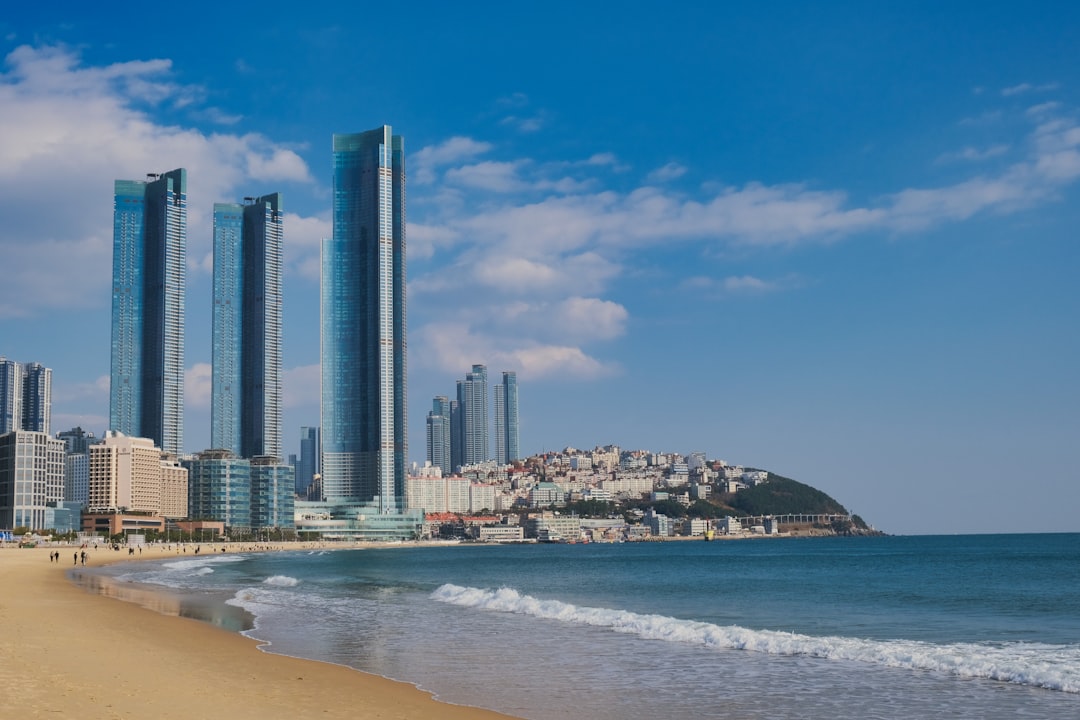
Featured image: Photo by Minku Kang on Unsplash